The future rarely arrives with a polite knock. Sometimes it slips into our lives through a screen, changes how we work, challenges what we believe is possible and leaves us scrambling to catch up. For Mic Mann, the question is not whether the world will change, but whether we are prepared to change with it.
As co-CEO of Singularity South Africa and CEO of Africarare, Mann has built his career around the intersection of technology, creativity and human potential. An entrepreneur, futurist and storyteller, he is part of a growing conversation about how emerging technologies could reshape industries, economies and the way people live. His work is driven by a question with particular significance for Africa: how do we move from being consumers of global innovation to becoming active participants in creating it?

It is a question that extends far beyond boardrooms and technology conferences. It speaks to opportunity, access, education and the continent’s ability to define its own future.
A storyteller at the heart of technological change
Mann’s journey into the future began with storytelling.
With an honours degree in scriptwriting, directing and film production from AFDA, he entered the world of experiential marketing and brand development through Mann Made, the family business he co-leads with his brother Shayne. The company has worked across marketing, events, digital experiences and immersive technologies, bringing brands and audiences together in increasingly creative ways.
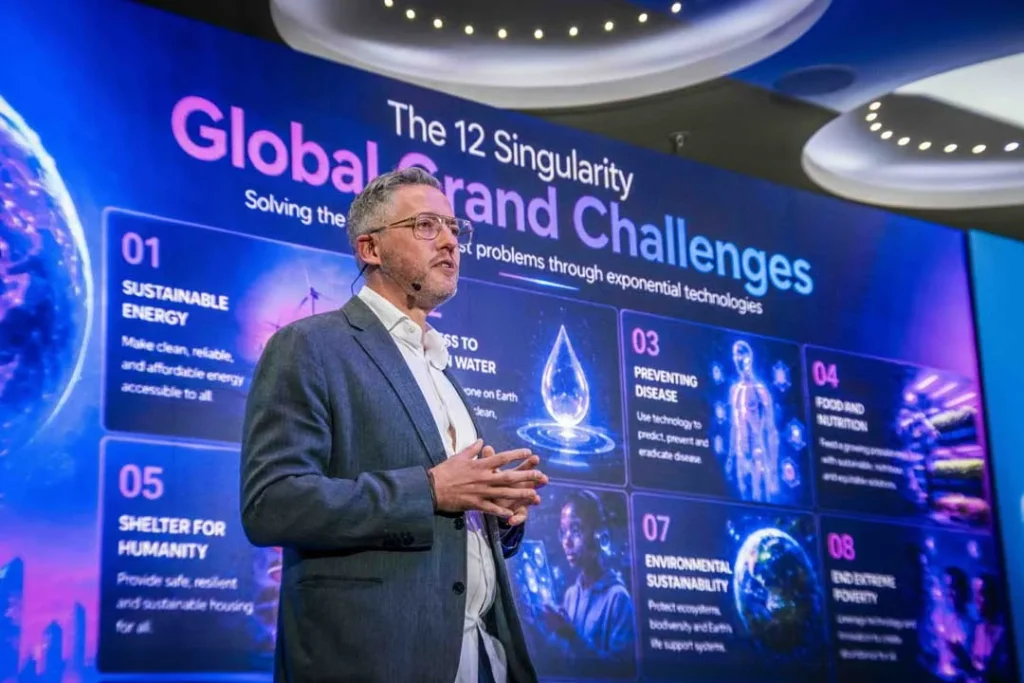
That creative foundation offers an interesting perspective on Mann’s work today. Technology may be the tool, but people remain the point.
Innovation is often discussed through numbers, algorithms and projections. Yet its real significance lies in what it enables people to do. It can change how a business operates, how a student learns, how a doctor approaches a diagnosis or how an entrepreneur builds something that previously seemed out of reach.
For Mann, understanding these possibilities requires more than keeping up with new developments. It requires a willingness to question established thinking and imagine alternatives.
Bringing the future into the present
In 2016, Mann and his partners brought Singularity’s programmes to South Africa, creating opportunities for local leaders, entrepreneurs and professionals to engage with exponential technologies and their potential impact. Since then, Singularity South Africa has used executive programmes, summits and other learning platforms to build a community focused on innovation and positive change.
The ambition is not simply to introduce people to futuristic ideas. It is to encourage them to understand how technological change could influence decisions they are making today.
Artificial intelligence is a clear example.
Once associated largely with science fiction and specialist research, AI has entered everyday working life. It can assist with research, content creation, data analysis and increasingly complex tasks. Its development also raises difficult questions about employment, ethics, accountability and the future value of human skills.
In an August 2026 interview with TechSmart, Mann argued that AI fluency is becoming increasingly important as businesses adapt to new capabilities. His message was that avoiding the technology altogether could leave people struggling to remain competitive, while curiosity and continuous learning offer a more productive starting point.
There is an important distinction here: adopting technology is not the same as understanding it. The real challenge is learning how to use these tools thoughtfully, recognising their limitations and deciding where human judgement remains essential.
For business leaders, that means looking beyond the excitement surrounding new tools and asking practical questions. What problems are we solving? Who benefits? What happens to the people whose work changes? And how do we ensure innovation creates meaningful value rather than simply impressive headlines?

Why Africa must help build the future
Perhaps the most compelling part of Mann’s work is his focus on Africa’s role in the global technology economy.
The continent has ambitious entrepreneurs, creative thinkers and talented engineers. Yet having talent is only one part of the equation. Access to capital, infrastructure, education and opportunities to develop and commercialise new ideas also matters.
Mann’s argument is that Africa should not simply wait for the rest of the world to determine what technological progress looks like.
In an August 2026 opinion piece for Business Day, he explored the possibilities presented by robotics, arguing that African innovators should focus on developing solutions suited to the continent’s own challenges rather than merely replicating products created elsewhere. He highlighted potential applications in healthcare, agriculture, mining, construction and education.
It is a perspective that places local relevance at the centre of innovation.
Imagine technology developed to support healthcare workers in under-resourced clinics, help small-scale farmers make better decisions or expand access to education across different languages. These are not abstract conversations about an imagined future. They are examples of how innovation could respond to real needs.
The opportunity is not simply to produce the next globally recognised technology company. It is to build an ecosystem in which African ideas can be developed, funded and taken to market.
That requires collaboration between business, government, universities, investors and the people whose lives these technologies are intended to improve.
It also requires a shift in ambition: from asking what Africa can adopt to asking what Africa can create.
Beyond the technology: the human question
For all the attention given to artificial intelligence, robotics and immersive digital environments, the future is ultimately a human question.
Technology can increase productivity, open new markets and make certain tasks easier. It can also deepen existing inequalities if its benefits remain concentrated among those who already have access to resources and opportunities.
The challenge, therefore, is not to celebrate every new invention without question. It is to understand what progress should look like and who should be included in it.
Mann’s work through Singularity South Africa places learning, collaboration and exponential thinking at the centre of this conversation. The idea is to help people recognise the pace of change and consider how they might respond, rather than allowing uncertainty to dictate their decisions.
That distinction matters in a country where technological ambition must exist alongside pressing social and economic realities. Innovation cannot be measured solely by how sophisticated a product is. Its broader value also depends on whether it solves problems, expands opportunity and contributes to a more resilient society.
A different way of imagining tomorrow
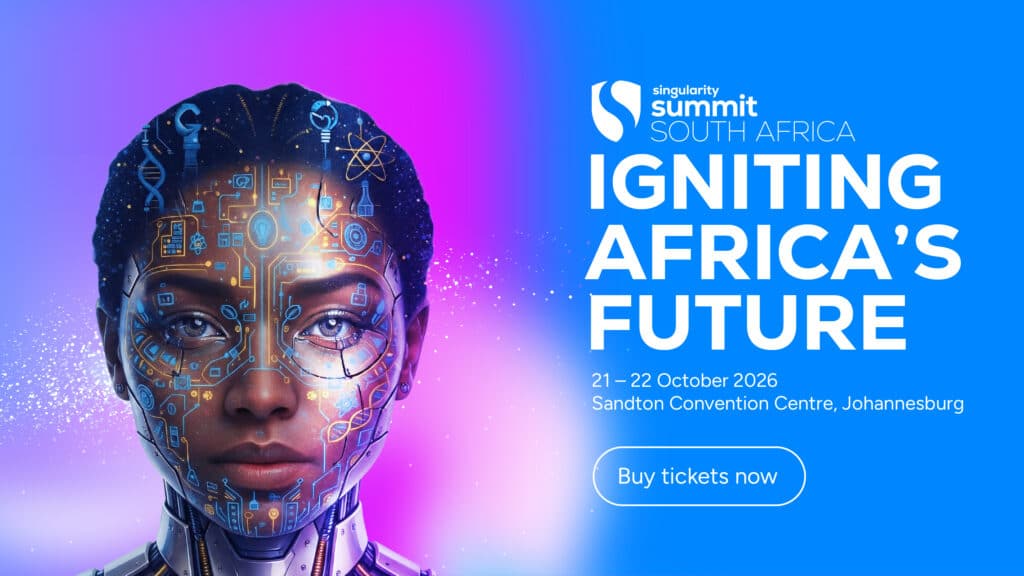
The Singularity South Africa Summit, held at the Sandton Convention Centre on 21 and 22 October 2026, brought this conversation into focus under the theme Igniting Africa’s Future. The programme brought together local and international speakers to explore AI, leadership, emerging technologies and human potential, with participation available both in person and through the metaverse.
For Mann, the significance of such a gathering extends beyond the stage. Bringing people with different expertise into the same space creates opportunities to challenge assumptions, exchange ideas and consider solutions that may not emerge within the boundaries of a single industry.
And perhaps that is where the real work begins.
The future will not be shaped by technology alone. It will be shaped by the people who decide how that technology is developed, who gets access to it and what problems it is ultimately used to solve.
Mic Mann’s contribution to this conversation is a reminder that Africa‘s place in the future is not a question that should be answered on the continent’s behalf. It is something that African innovators, leaders and communities must actively shape.
Tomorrow may be arriving faster than we expected. The question is whether we will spend our time trying to catch up or begin building something of our own.
For Africa, the opportunity lies in doing both — learning from the world while having the confidence to create beyond its expectations.


Related Articles

Recovery Before Burnout: Inside Sandton Longevity Lounge
Sandton Longevity Lounge has opened in Morningside with a proposition…
Why an AI Wine Guide at WineX Points You Back to the Winemaker
Standard Bank Private WineX has introduced an AI wine guide…
ZENITH and USM Hold Up a Mirror to the DEFY Chronograph
ZENITH and USM Modular Furniture have returned to the partnership…