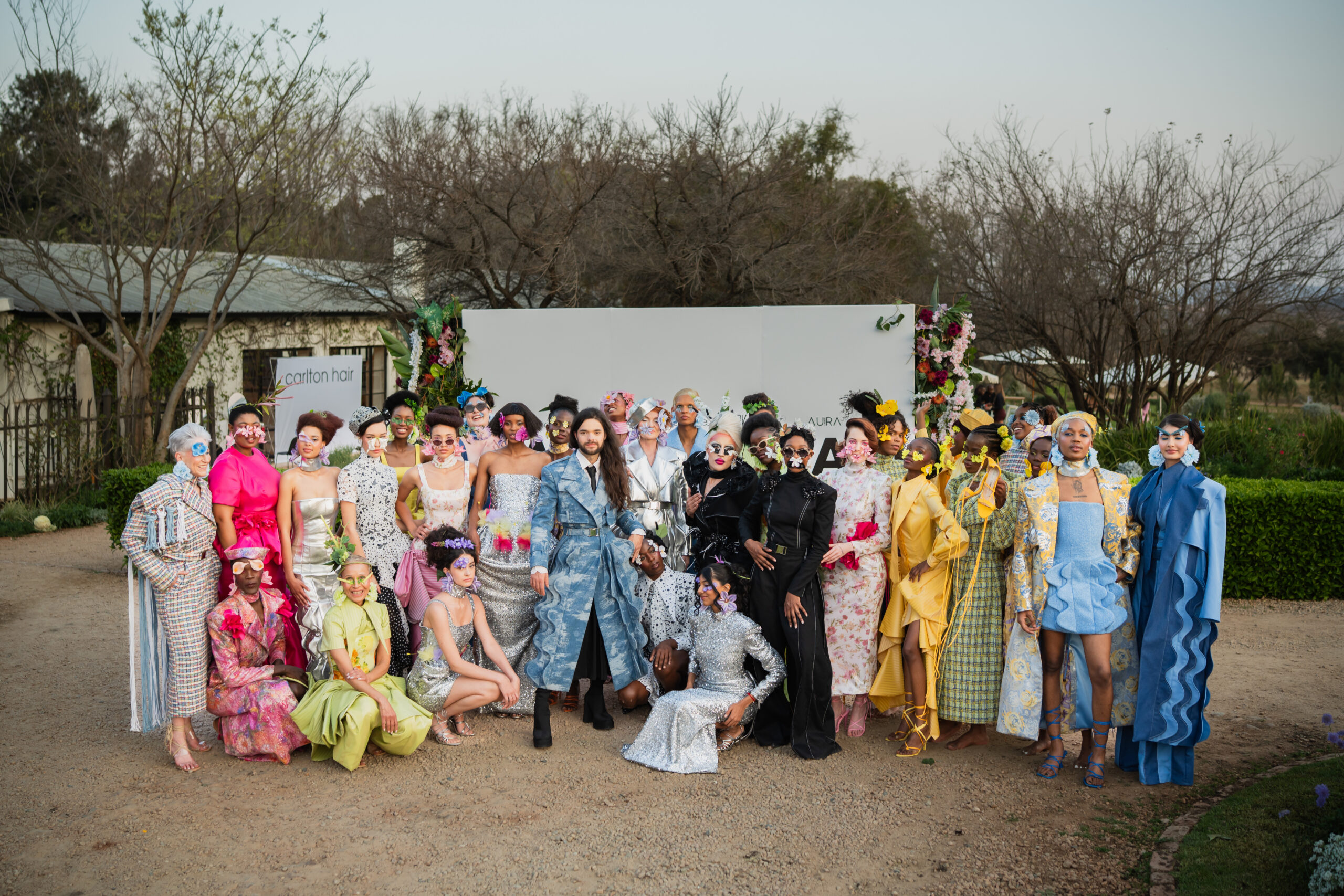
Thirty handcrafted looks by The BAM Collective, an operatic opening and a cast that moved through the audience rather than past it. Staged beneath a wattle canopy at GROUND The Venue in Muldersdrift, CHROMISM 26/27 is the largest collection the house has presented and the most technically demanding production in its history. Here are seven things that made it matter, from the brief it took from nature to the standard it sets for the South African runway.
The forest was never meant to be a backdrop
Late afternoon light falls through a wattle canopy in a way no lighting rig can convincingly imitate. Shafts of it move across the ground, the trees stand in as columns, and the colour of everything shifts by the minute. This is what Jacques Bam and his collaborators chose to work with rather than against when The BAM Collective presented CHROMISM 26/27 at GROUND The Venue in Muldersdrift, west of Johannesburg, to an audience of roughly 200 guests drawn from the country’s fashion, media and creative industries.
Thirty looks made it the house’s largest collection to date, and by some distance its most complex production. What it also did was reframe what the independent South African fashion house is willing to attempt. CHROMISM was not staged as a show to be watched from a seat. It was built to be entered.
Attraction, treated as a design discipline
The collection takes its starting point from the idea that beauty in nature is functional. Colour, form, texture and scent evolved over millions of years not to decorate but to communicate, to attract and ultimately to ensure survival. CHROMISM applies that logic to clothing.
“Attraction is often mistaken for something superficial, but in nature it’s one of the most powerful forces for survival, communication and evolution,” says Jacques Bam, founder and creative director. “CHROMISM asks what happens when fashion adopts that same purpose, when every colour, texture and silhouette is designed not simply to decorate, but to create connection.”
It is a brief with real consequences for the garments. Nothing in the collection is neutral, and very little of it is quiet.
The reception was built as a prologue
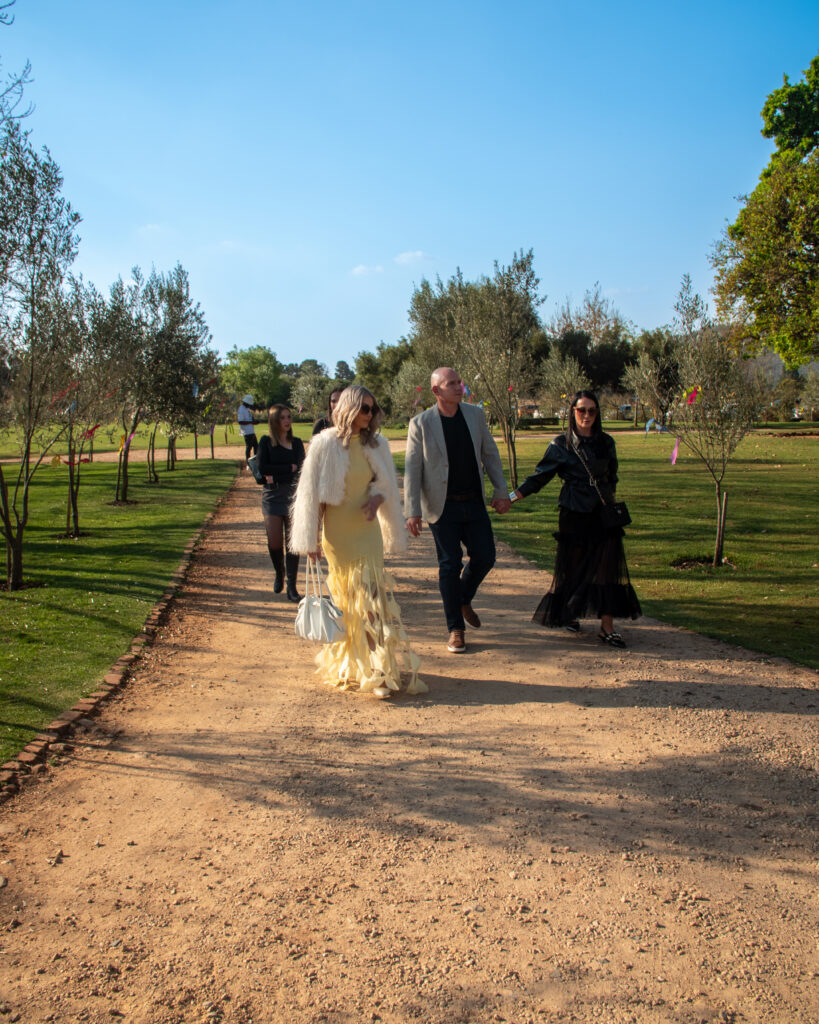
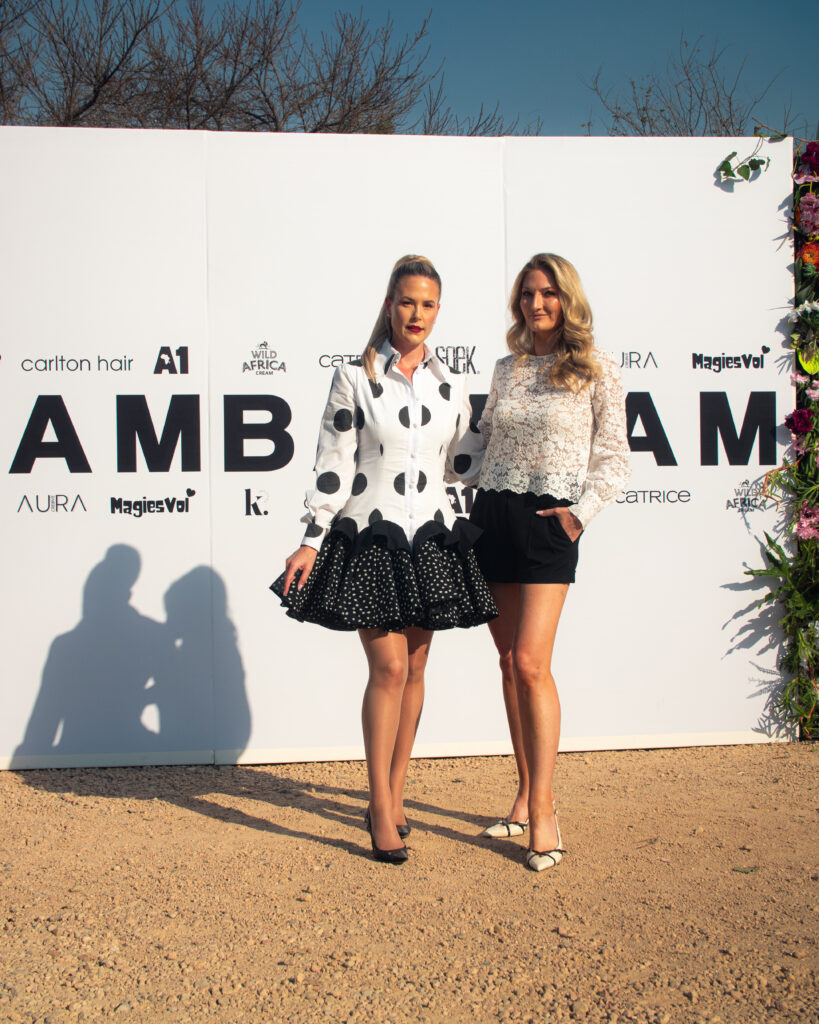
Guests arrived at the house’s signature media wall, framed in foliage, before following tree lined pathways towards the forest. Those pathways were hung with hundreds of ribbons tied by hand from fabrics used in previous BAM collections, so that the brand’s own creative history accompanied the audience on the walk in. It is the kind of detail that costs enormous labour and announces nothing about itself, which is usually the sign of a house that means what it says.
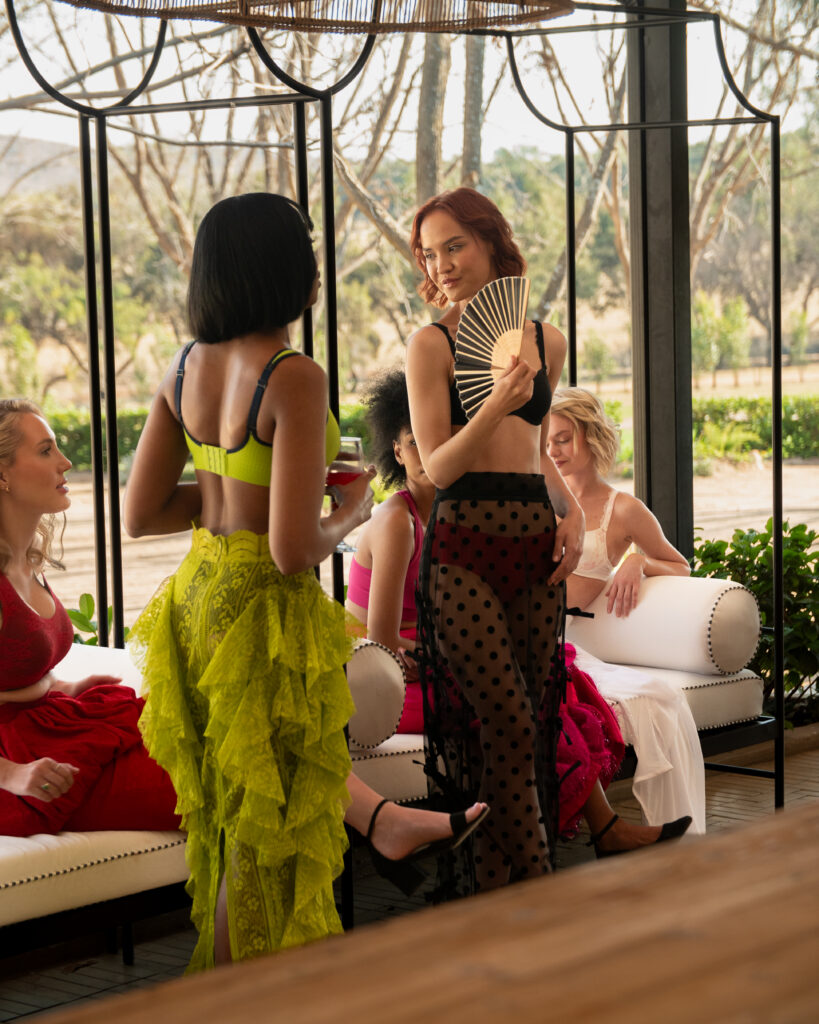
Inside the reception, a bespoke Wild Africa Cream bar received guests while Carlton Hair and Catrice Cosmetics offered hair and makeup touch ups through the afternoon. SOEK Sunglasses South Africa presented an installation with founder Angelique on hand, and the Kalon Wellness and Bra Studio media lounge paired the brand’s bras with BAM skirts in a live installation that put construction and the body in direct conversation. A1 Drink’s African Craft Soda circulated front of house. Backstage, Magiesvol kept the cast and crew fed.
The commercial reading here matters. This was not sponsorship bolted onto a runway. Each partner occupied a space that made sense within the collection’s own argument about colour, craft and the senses, which is precisely what brands are increasingly paying for.
The colour story moved from restraint to abundance
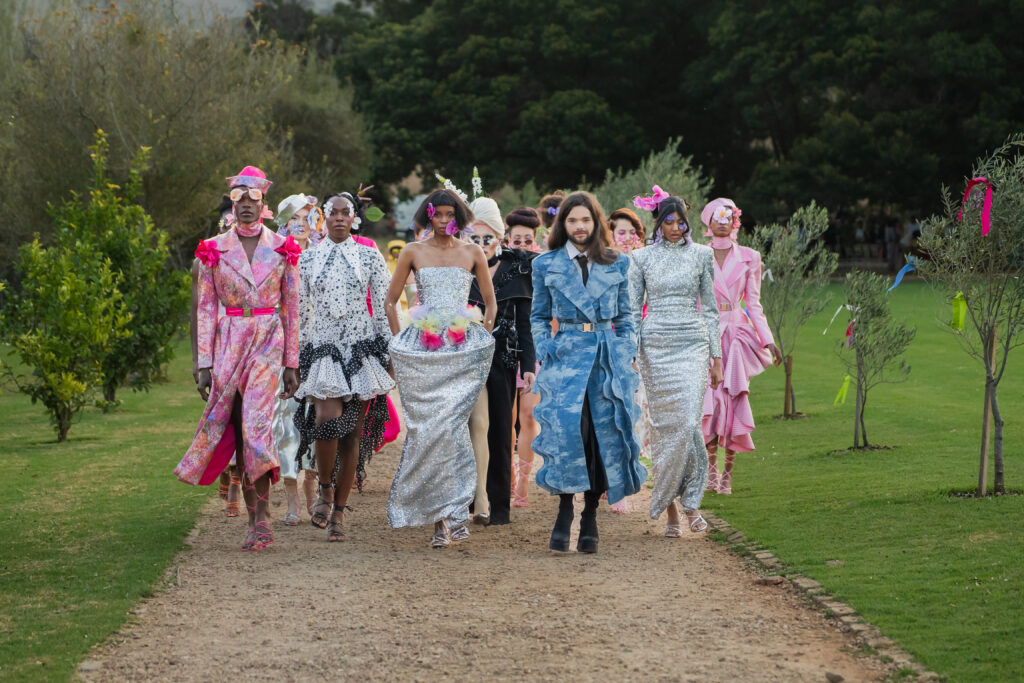
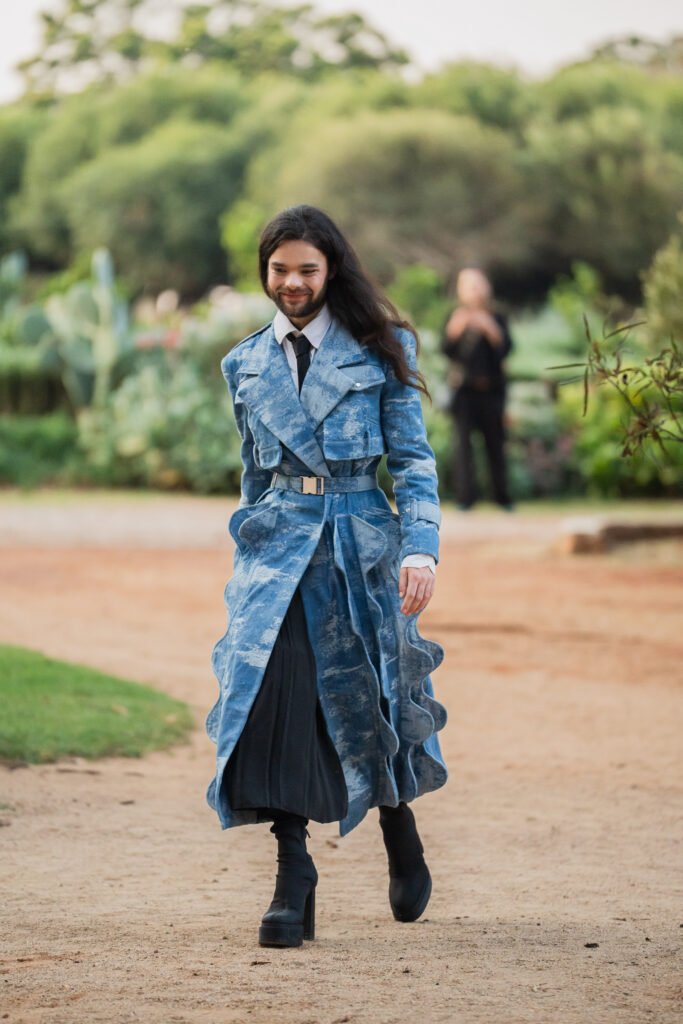
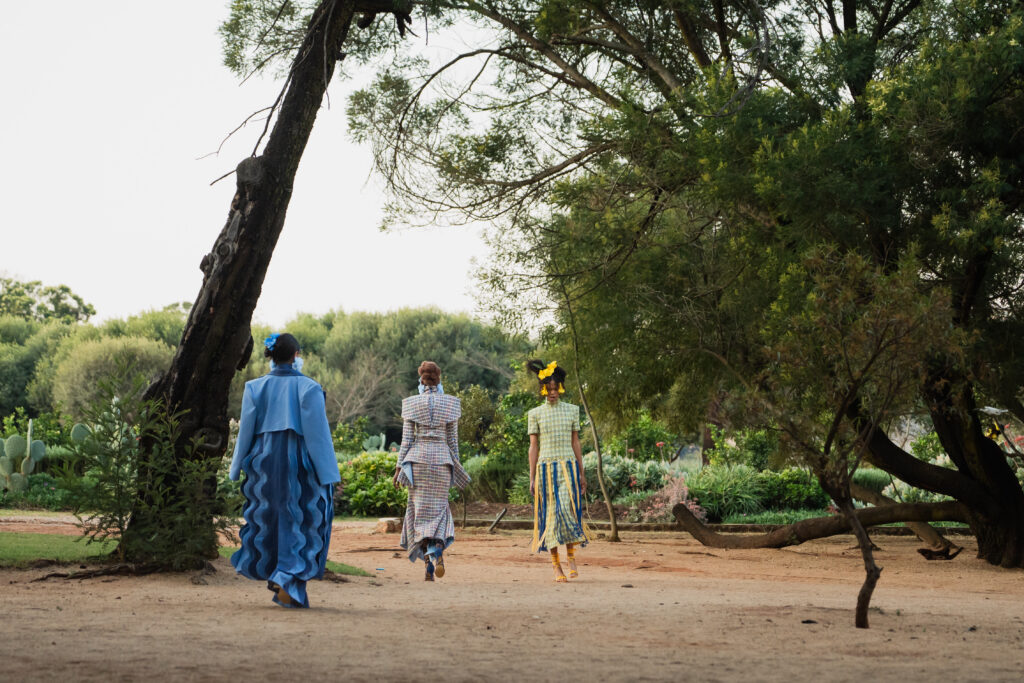
Under the creative leadership of Natalia Fernandez, Aura Creative turned the forest into a working theatre. Models emerged from between the trees and wove through the audience in a choreographed procession that left no clear line between presentation, performance and landscape.
ADAM ‘The Drag Diva’ opened the showcase with a rendition of Vesti la giubba that carried through the trees, before walking the collection’s first look. From there a cinematic score composed by Aura Creative gathered intensity across the presentation, introducing psychedelic texture and rave inflected undertones as the colour built.
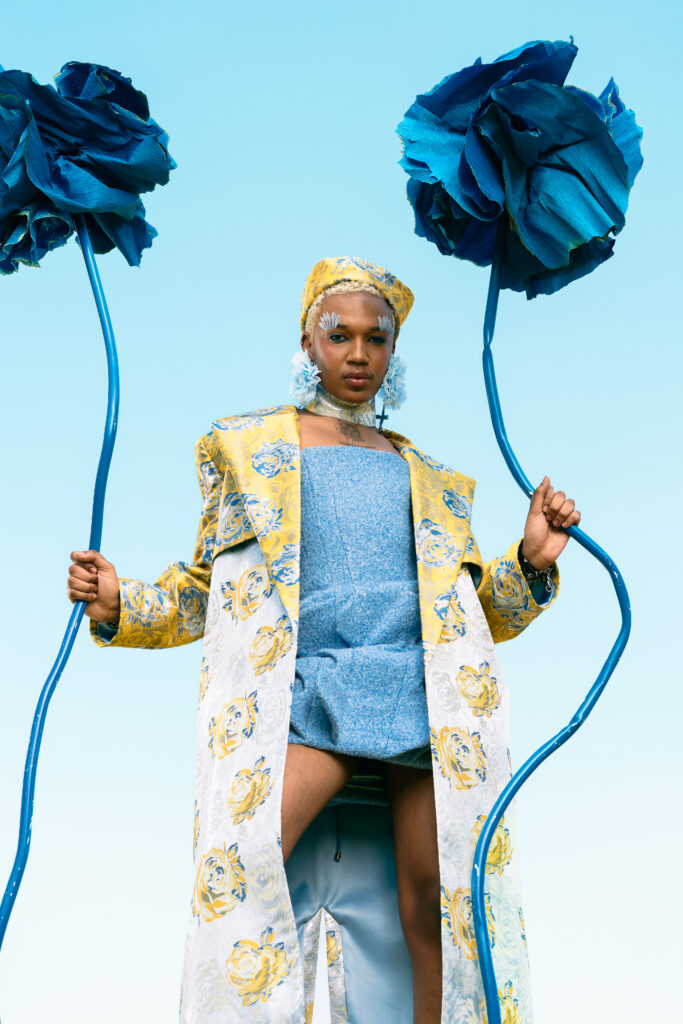
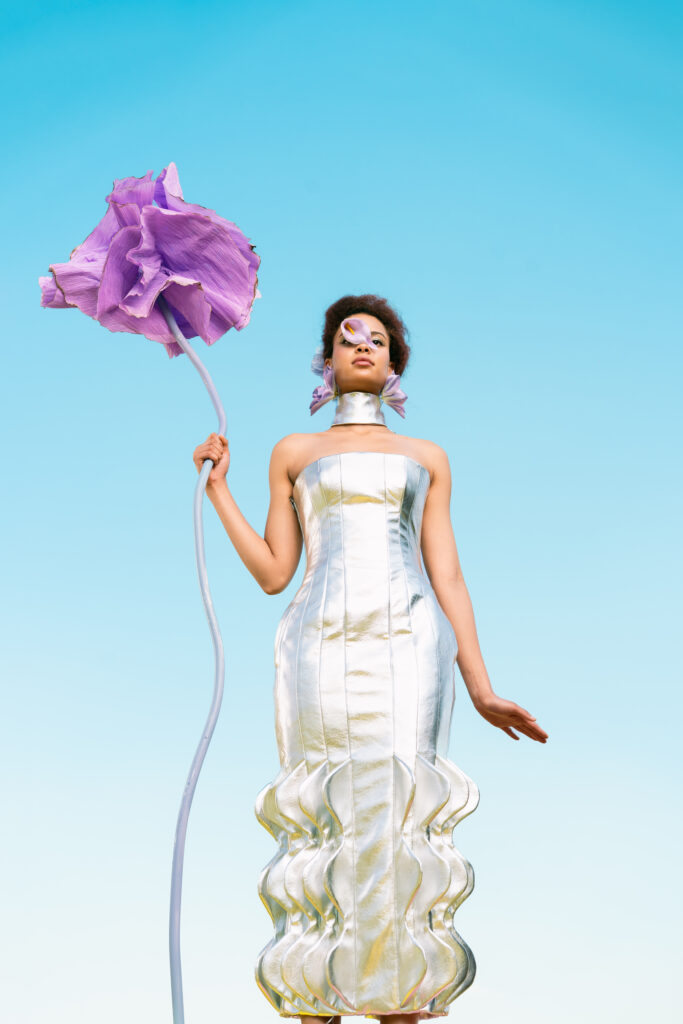
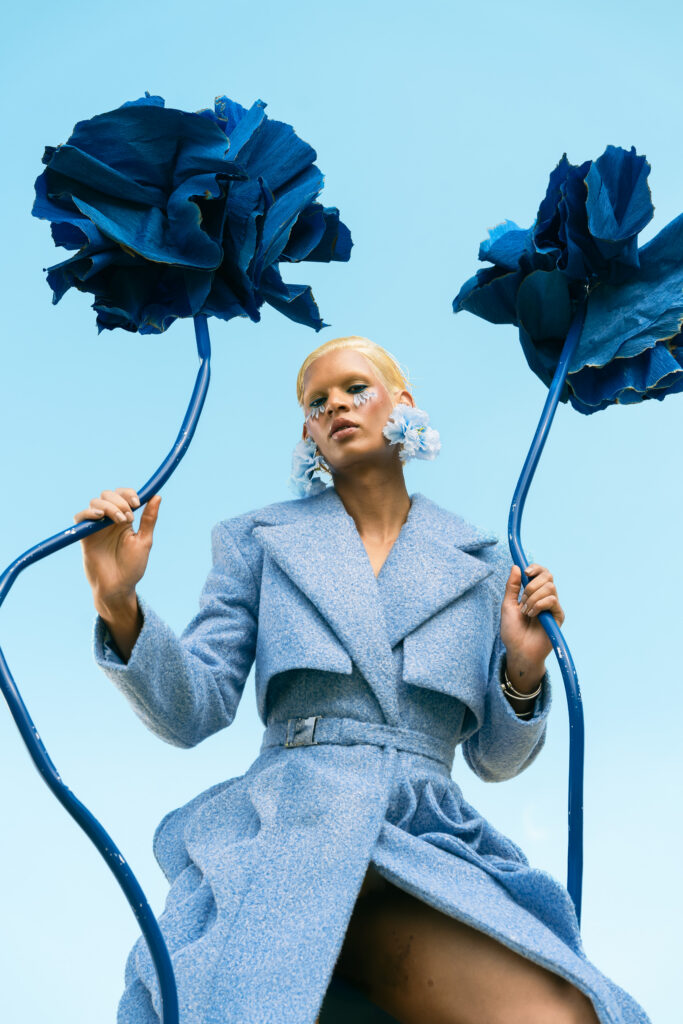
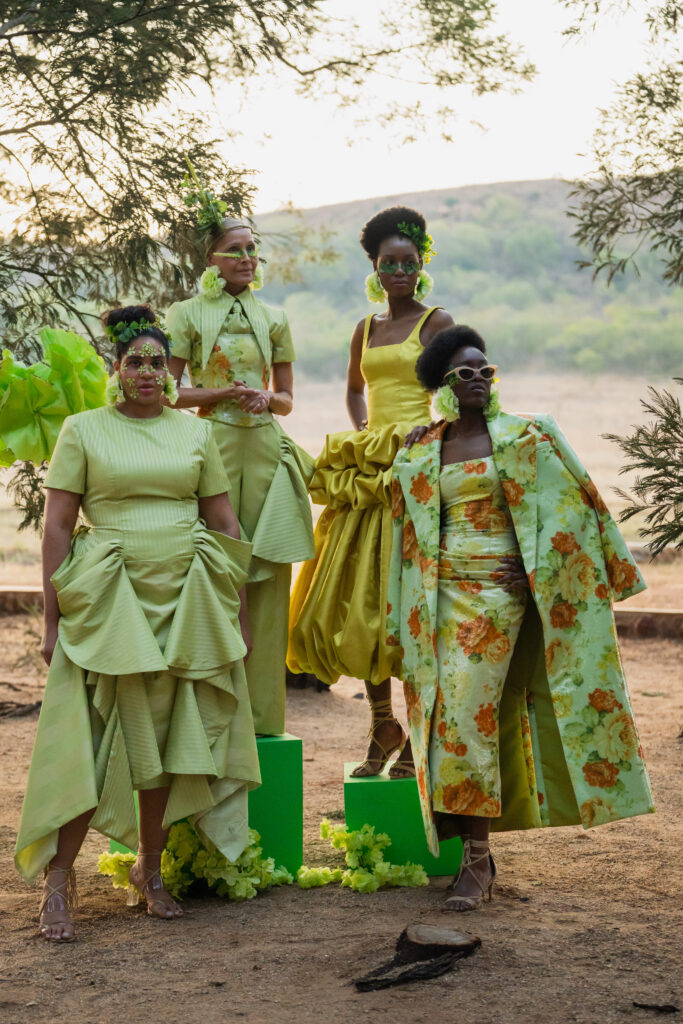
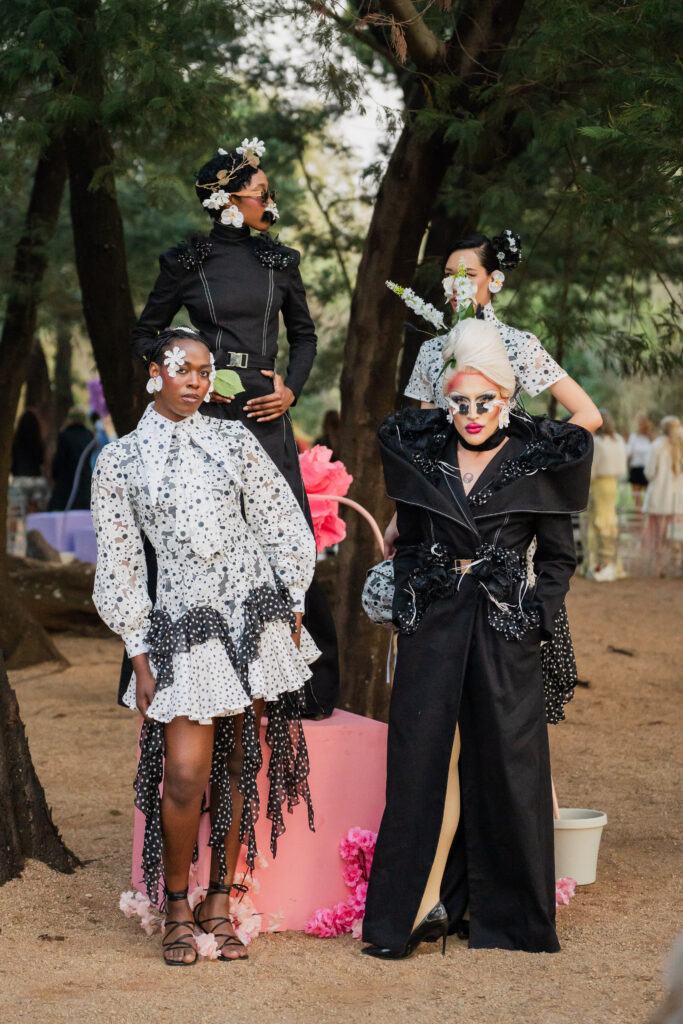
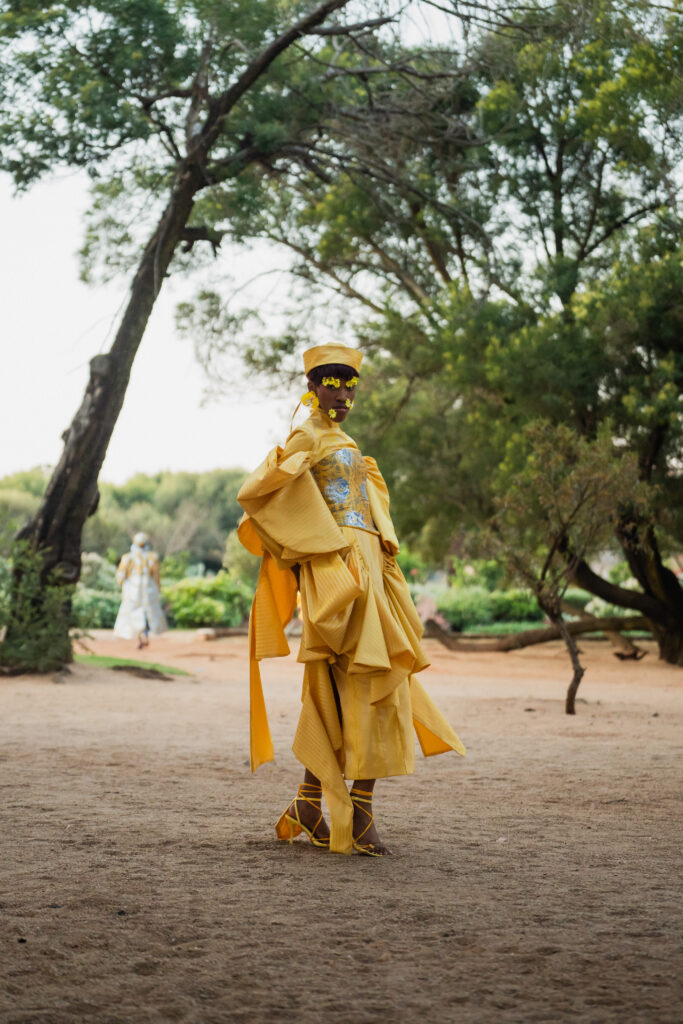
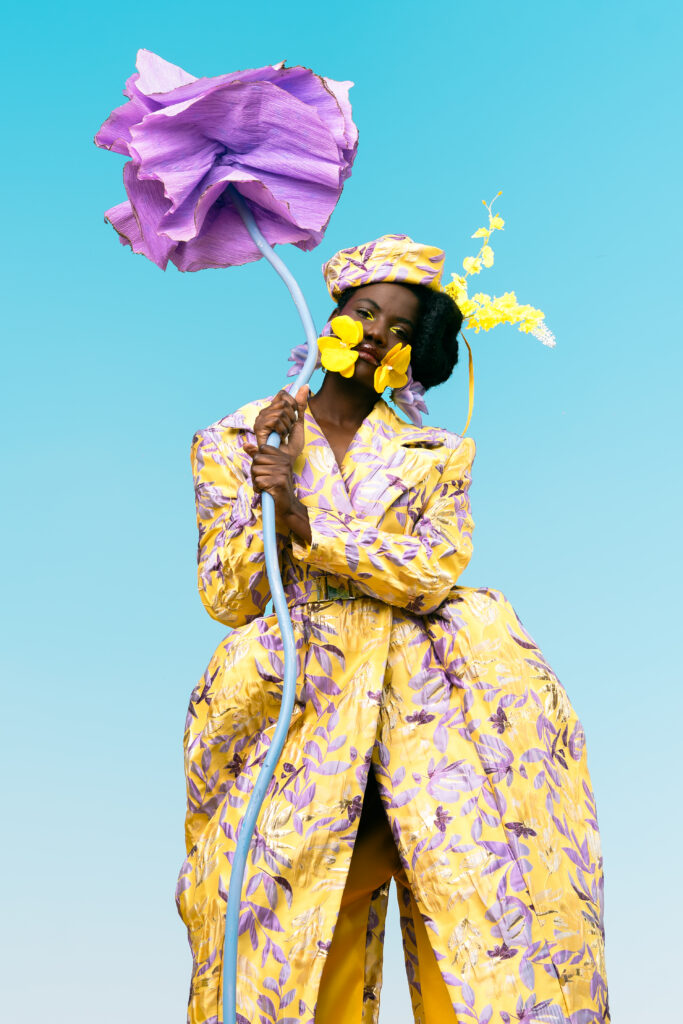
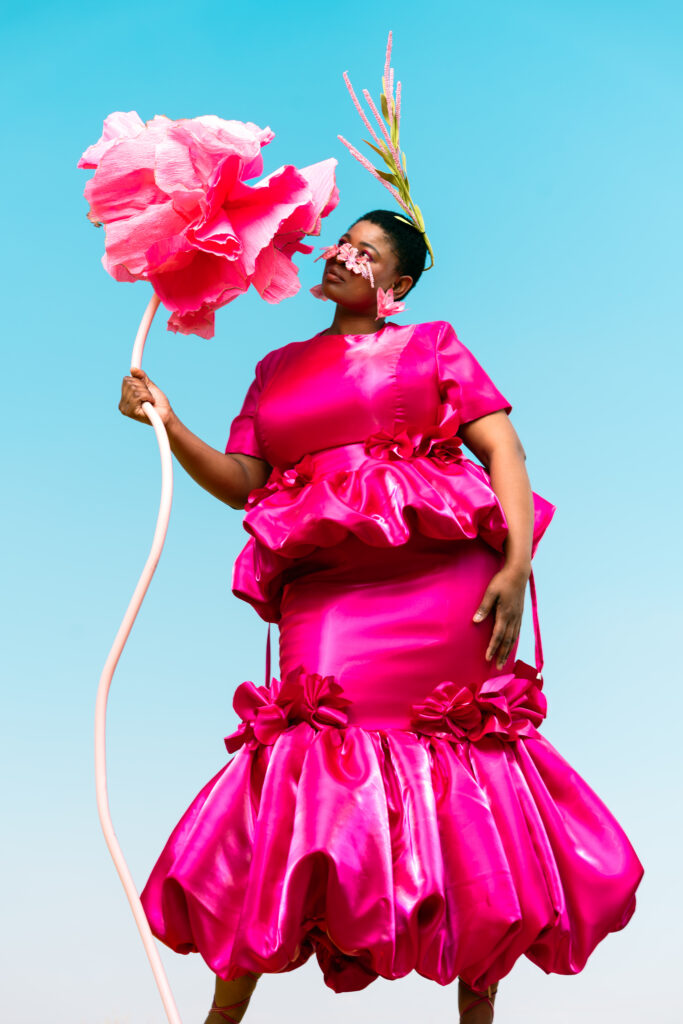
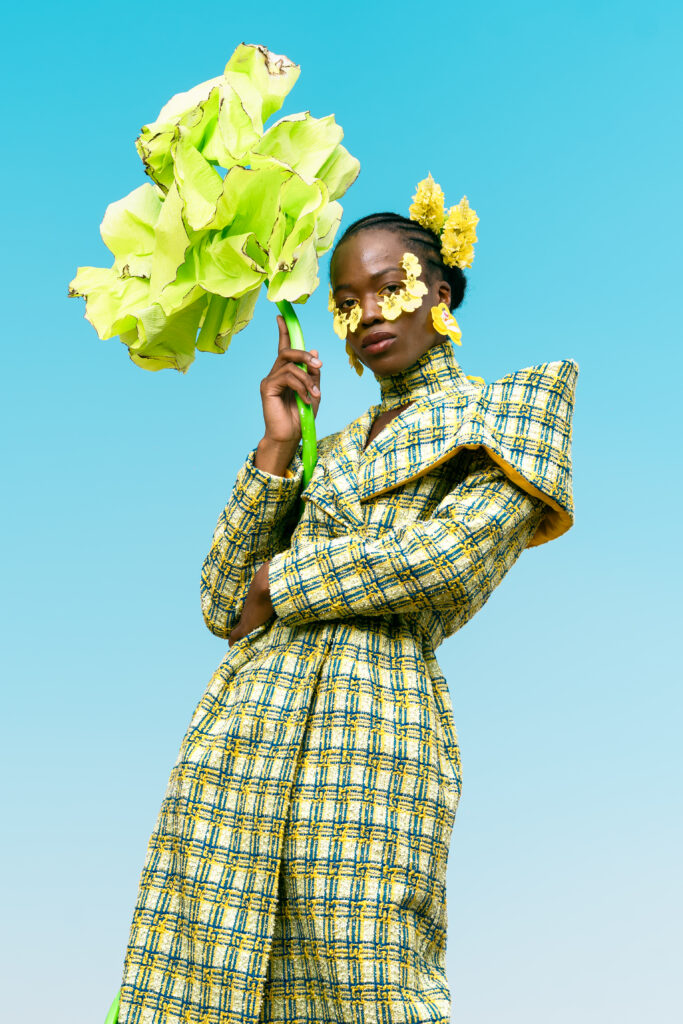
The collection itself moved in chapters. It began in sculptural black, progressed through monochrome, then vivid pink, verdant green, electric blue and luminous yellow, and resolved in architectural silver dressed with multicoloured tulle florals. The progression reads as a colour story and functions as an argument: restraint giving way to abundance, exactly as it does in the natural world.
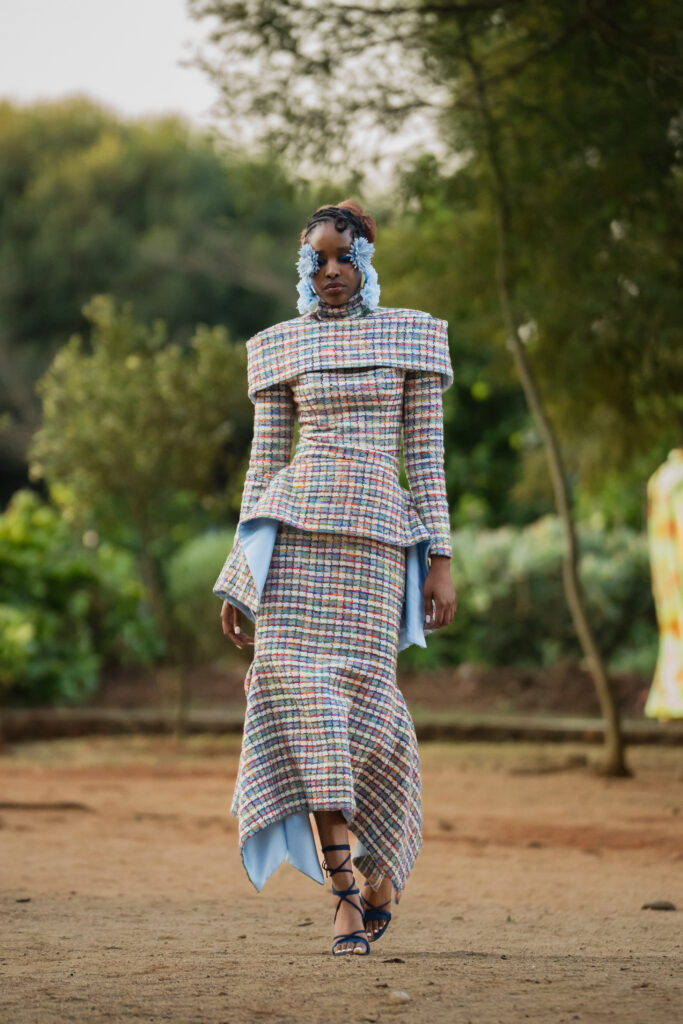
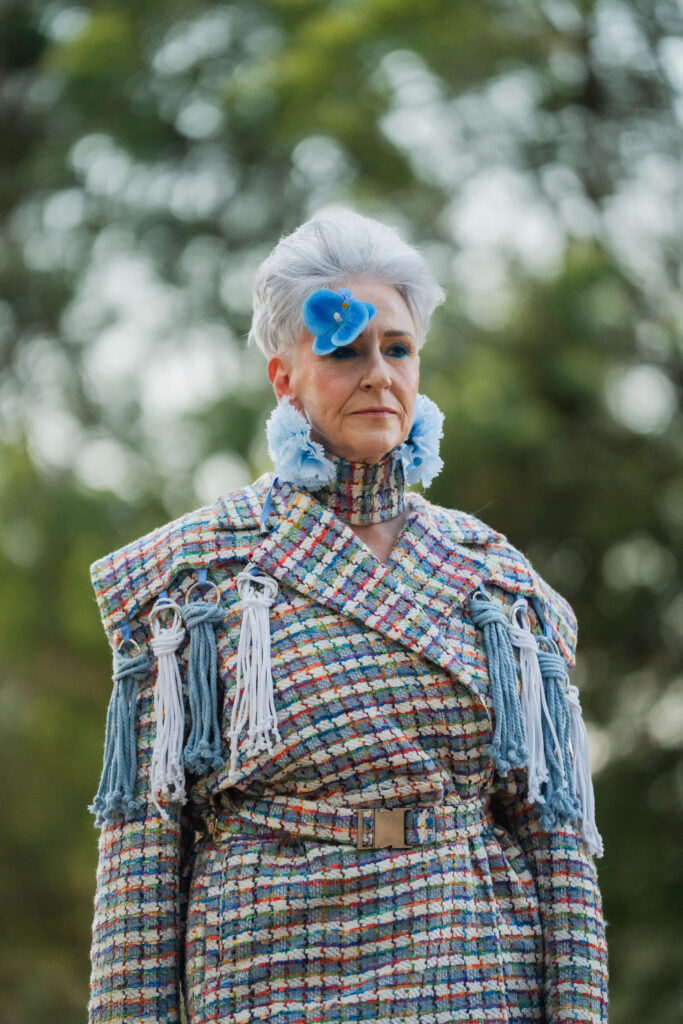
Surface carried equal weight. Polka dot chiffons sat alongside floral sequins, textured bouclés, brocades, sculptural striped taffetas and the house’s signature denims. Feather embellishment, cascading fringe, textile manipulation and bouquets of individually handmade fabric flowers put the atelier’s hours on display where they could be seen.
The finale as a single living installation
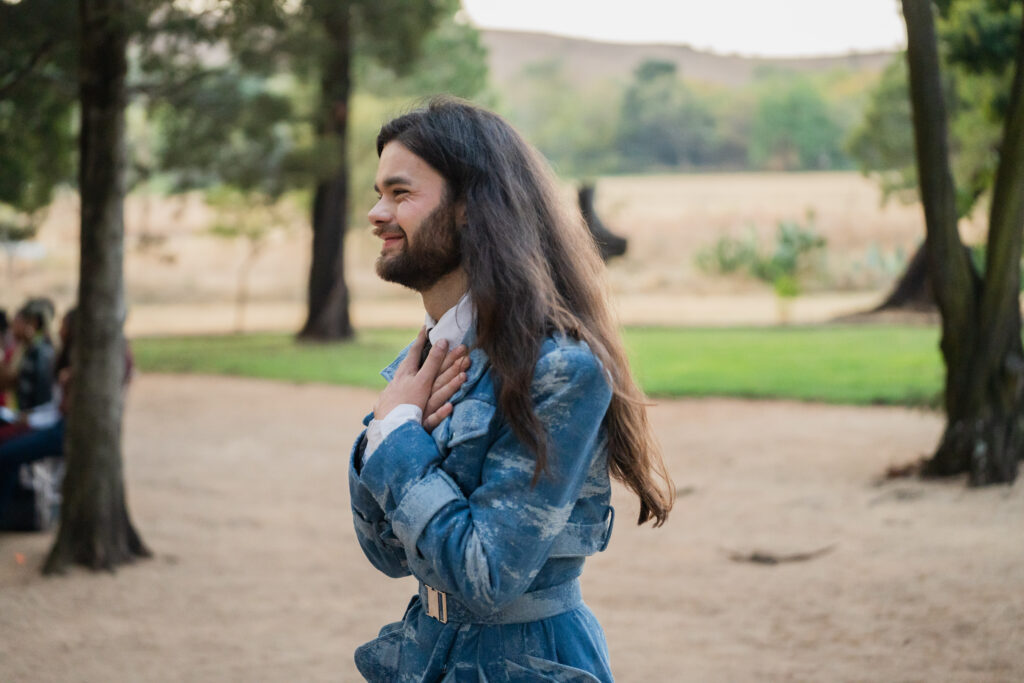
Models emerged in growing numbers from a bend in the forest until an army of colour surrounded the audience, arranging themselves on coloured plinths set among the trees. For the first time the full chromatic range of the collection stood together at once. Jacques Bam then entered and led the cast in a final procession through the audience and out of the venue.
It is worth noting what that required. The final garments were completed by Bam and his atelier working through the night before the presentation, a detail the house does not hide and probably should not, since it is the honest arithmetic of independent fashion at this scale.
A cast that looks like the country
The runway carried diversity across age, race, body type and gender identity, consistent with the house’s stated position that extraordinary fashion belongs to everybody. Familiar faces including Yasmin Furmie, Deborah Chambers, Ponahalo Mojapelo, Constance More, Nkuley Masemola, Mordecai Ngubane, Yuri Pailman, Caley Nkosi and Marika Opperman walked alongside a broader cast.
Guests included Khanyi Mbau and Khanukani “Khanz” Mbau, Siphesihle Ndaba, Phuti Khomo, Siyanda Bani, Zandile Msutwana, Yolanda Mukondi, Mrs Winderley and designer Mzukisi Mbane, with editors, stylists and members of the country’s fashion media in attendance.
Pierre Van Vuuren photographed both the campaign and the runway. Black Leopard Media, the collection’s official media partner, produced photography, social content and the cinematic runway film. Alex Botha led the Catrice Cosmetics team on surreal three dimensional floral makeup drawn from the collection’s palette, while Cindy Gorman and Boyd Meilhon led Carlton Hair in sculptural styles from which floral forms appeared to bloom. Students from STADIO School of Fashion supported backstage and front of house operations, and Keystone Productions handled the technical build.
The ambition behind the production
“For me, the runway has never just been about presenting clothes. It’s one of fashion’s most powerful storytelling tools,” Bam says. “Every collection challenges us to ask how we can push a little further, not simply to create bigger productions, but to create experiences that stay with people. South Africa has some of the most extraordinary creative talent in the world, and I believe our fashion presentations should reflect that. Our dream has never been to create memorable fashion shows for The BAM Collective alone. It’s to contribute to a future where South African fashion experiences become destinations in their own right, where audiences arrive expecting to be surprised, moved and inspired by what’s possible. If CHROMISM encourages more designers and creatives to dream bigger, collaborate more boldly and continue raising the standard of what a fashion showcase can be, then we’ve achieved something truly meaningful.”
What CHROMISM asks of everyone else
South African fashion has never lacked talent. What it has often lacked is the production ambition to present that talent on terms that command international attention, and the willingness to absorb the cost and risk of doing so. CHROMISM is an independent house spending its credibility on that question, in a forest, with thirty looks and a cast walking through the crowd rather than past it. The garments will be judged on their own merits, as they should be. The larger point is the standard it sets for what a runway in this country can be asked to do.


Related Articles
The Badge Has Changed: How South African Luxury Car Buyers Are Rewriting Automotive Status
For decades, South African luxury car buyers saw a German…
Inside Gucci’s Season of Causes: New York, Athens and Venice
In the space of two days, Gucci moved from a…
From Heritage to Haute Cuisine: The New SA Table Takes the Stage at The Good Life Show
The Good Life Show Johannesburg returns to the Sandton Convention…