For decades, South African luxury car buyers saw a German badge on the bonnet as the clearest status signal on the road. New data in the Cars.co.za Motor Industry Report 2026 suggests that signal is weakening. Buyers at the top of the market are now looking at bakkies, Buyers at the top of the market are now looking at bakkies and Japanese off roaders, and that says a good deal about what status means in 2026.
Ten years of shifting loyalty
Cars.co.za has spent a decade watching what South Africa’s luxury car shoppers enquire about, and the pattern has changed. In 2016, 83.73% of people on the platform who enquired about a BMW, Mercedes-Benz or Audi priced between R700 000 and R1m also enquired about another German car. By 2026 that figure had fallen to 63.91%.
The number is striking, but the report behind it avoids easy conclusions. Most German luxury shoppers still look at another German car, so this is not a straightforward loss of desire for the German trio. What has changed is what else sits on the shortlist. That second list says more about South African taste than any sales table.
The report was released ahead of DealerCon, where more than 1 000 dealer representatives are expected. It combines Cars.co.za’s enquiry data and a new survey of more than 2 000 active car shoppers with credit and affordability data from TransUnion and vehicle finance data from Absa. Together, they show a market where demand is strong but the old order is being questioned.
The year the shortlist widened
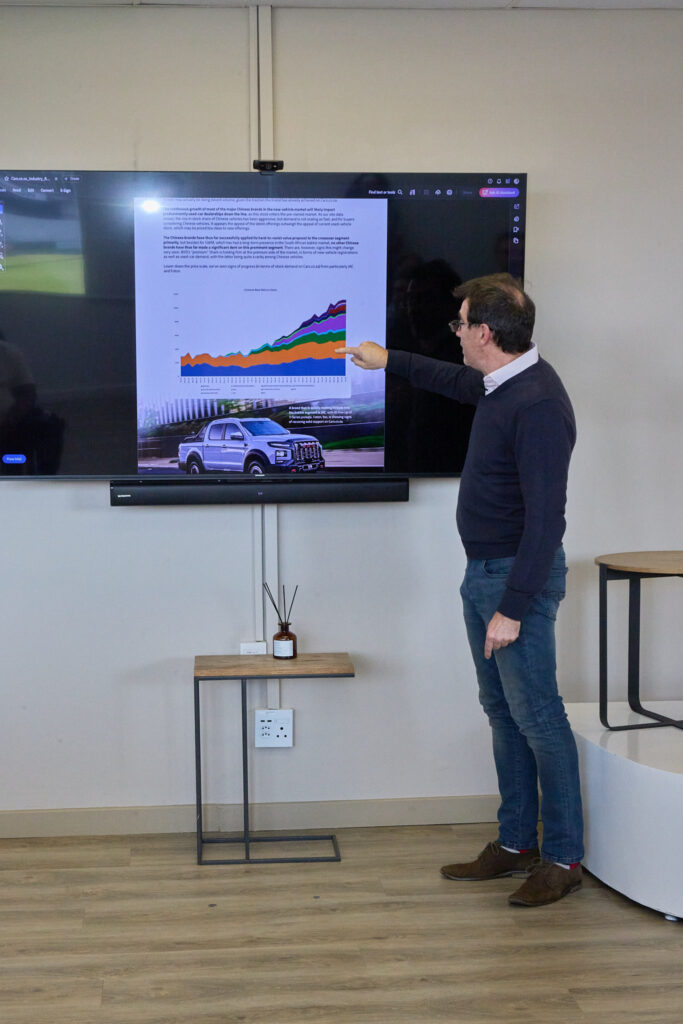
The decline did not happen gradually. For almost every German brand and price band, loyalty dropped sharply in one year, from 2020 to 2021. Because the data covers both new and used stock, the report reads this as more than a pandemic stock shortage. Caution and affordability pressure pushed buyers to look across more brands and price points. At the same time, the flagship lifestyle double cab bakkie was becoming popular, which gave buyers a very different kind of vehicle to aspire to.
Since then the figures have moved within a narrow range. The gains have gone to Japanese brands, which are now clearly the preferred alternative, and to American brands, which in practice almost always means Ford and, more specifically, the Ranger.
The brands have not been affected equally. Between R700 000 and R1m, BMW shoppers remain the most likely to consider another German car. Above R1m, German consideration linked to BMW has even risen slightly this year. Audi has seen the steepest fall in German consideration in the lower band, and its shoppers are the most likely of the German group to look at a Chinese vehicle. Mercedes-Benz shoppers, the report notes, are generally more willing than BMW shoppers to look at cars from other countries.
Bakkies have become aspirational
The most revealing detail is which vehicles appear next to the German badges. Among BMW shoppers in the R700 000 to R1m band, the Ford Ranger has become a regular consideration over the past two years. For Audi shoppers in the same band, the first Audi on the list, a used Q5, only appears in fourth place, behind the BMW X3 and the Ranger. Above R1m, Mercedes-AMG shoppers show the clearest version of the trend: the Ford Ranger, almost entirely in Raptor form, leads their list of other vehicles considered.
The high end of the bakkie market shows the same thing. Toyota’s Land Cruiser 79 recorded 25% growth in enquiries above R1m and is close to overtaking the Ranger Raptor as the most sought after vehicle in that segment. Its share of that top bracket fell from 37.25% to 31.94%, although the Ranger still leads the bakkie category in most price bands. New sales tell a similar story. The Land Cruiser 79, which the report calls a rugged status symbol, sold 2 615 units in the first half of 2026, which is notable for a vehicle at its price.
Absa’s finance data supports this. Double cab bakkies priced above R600 000 are the fastest growing part of the bakkie market, up 59% year on year and now 21% of all bakkie finance applications. The average bakkie application has risen by 20% in three years to R448 000.
The report adds an important caveat. Its enquiry data tracks everything a buyer looks at within a year, so a Land Cruiser enquiry alongside a Mercedes-Benz enquiry may mean a second car rather than a replacement. That makes the finding more interesting, not less. The second car in an affluent household used to be a smaller German hatchback. Now it is more likely to be a bakkie or a rugged SUV. The report concludes that status increasingly includes rugged, active lifestyle vehicles, especially from Ford and Toyota.
The shortlist starts on social media
The report also shows where these preferences take shape. In its survey of more than 2 000 active shoppers, social media was the most common way buyers first discovered the car they enquired about. Online and mobile advertising came second, and seeing a car on the road came third. Television, radio and billboards came last by a wide margin.
Ford was the clear exception. Its buyers were far more likely than others to have discovered the car on display or through television, radio or billboards, and those channels barely registered for most other brands.
Social media’s influence fades as buyers gain experience. It dominates discovery for first time buyers, while people who already own more than one car rely more on reviews and on driving a car themselves. Reviews also become more influential with age. Online and mobile advertising reached older buyers more effectively than younger ones.
When buyers research a shortlist, test drives and written reviews are the two leading sources, with video reviews close behind, and social media falls to the middle of the list. For marketers, the takeaway is clear: social media can create desire, but reviews and test drives usually decide the purchase.
The platforms show the scale of that audience. Cars.co.za reports 556 000 YouTube subscribers and 171 million views since 2014, alongside 794 000 Facebook followers and 357 000 on TikTok. The report adds a caveat: its survey respondents are mostly men and Millennials, so the findings describe active Cars.co.za shoppers rather than all South Africans.
German prestige is still ahead
None of this means the German brands have lost their standing. In the report’s analysis of how buyers perceive each brand, Audi, Mercedes-Benz and BMW are the only brands that buyers strongly associate with both status and technology. Toyota is seen as highly practical, but it also leans towards status, helped by the appeal of its bakkies and SUVs.
In his foreword, Cars.co.za managing director Amasi Mwela says: “Change in this industry rarely announces itself politely.”
Where desire now begins
Status in South Africa now depends less on one badge and more on the mix of cars a household owns. That view is often formed through video and social media long before a buyer visits a showroom. A German saloon still carries weight, but it now often sits next to a Raptor or a Land Cruiser. The German brands can still keep their place, but they will have to compete for it in a buyer’s social media feed as well as in the showroom.


Related Articles
Represent Finds Its First African Home at the V&A Waterfront
The British luxury streetwear label Represent, has opened its first…
Legacy in Motion: IWFSA’s Hall of Femme Asks What Leadership Sets in Motion
For its fourth edition, the IWFSA (International Women’s Forum South…
The Pot Luck Club Hands On Expierence, Jason Kosmas and Ivor Jones Rethink the Art of Dining
On 13 and 14 November, at the Pot Luck club…