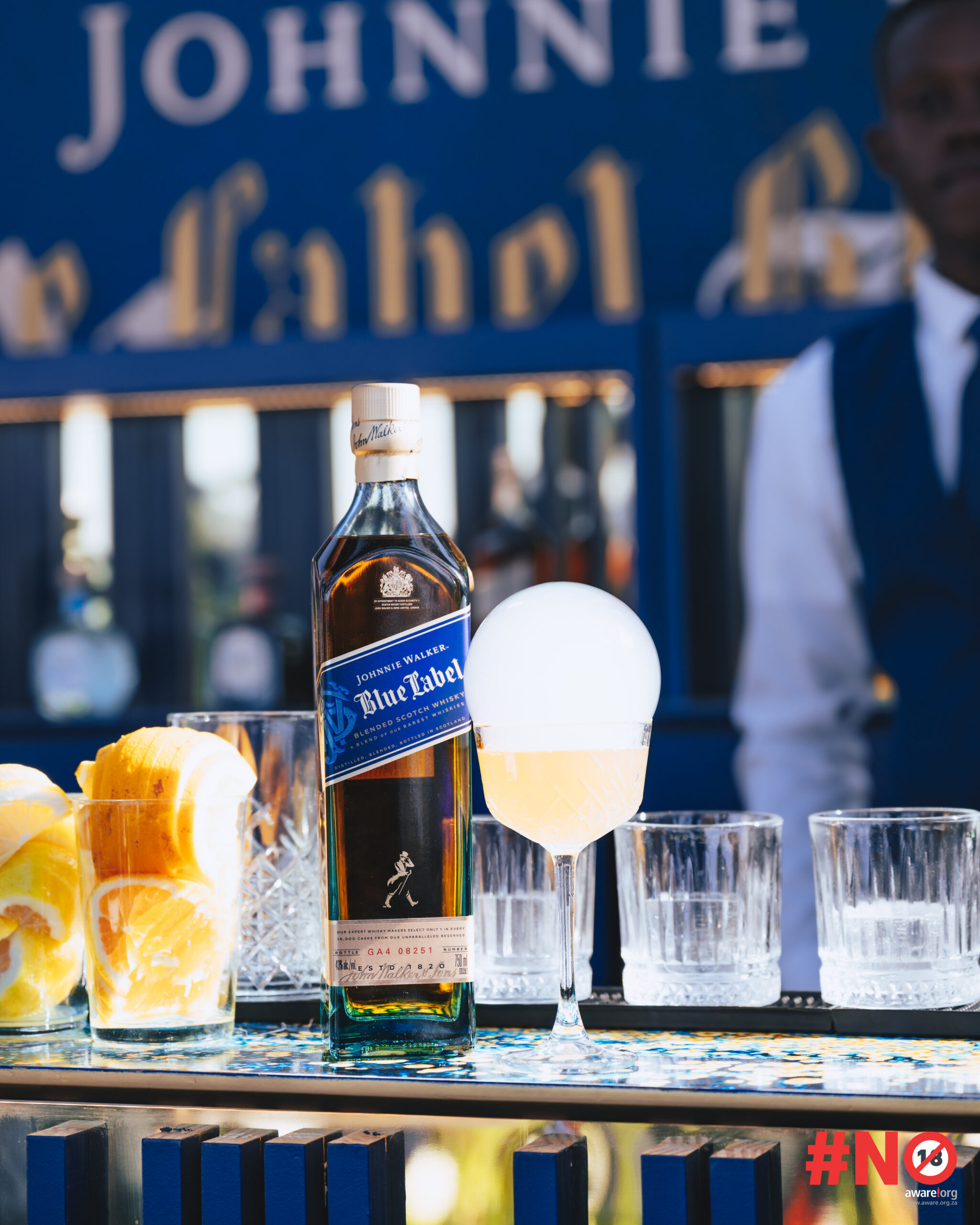
Only one cask in 10,000 is considered worthy of Johnnie Walker Blue Label. In a market where luxury is increasingly read as restraint rather than display, that kind of scarcity carries more weight than volume ever could. This is why the blend continues to hold its position, and why it remains one of the most considered gifts in the category.
Before the First Sip
There is a moment before the first sip when the room adjusts. The bottle is set down, the amber liquid settles in the glass, and the conversation slows by half a beat. It happens in private dining rooms in Sandton and in quieter corners of Cape Town restaurants, and it happens because of what is being poured rather than who is pouring it. Johnnie Walker Blue Label announces very little. It simply changes the tempo.
That restraint is deliberate, and it begins long before the whisky reaches the glass.
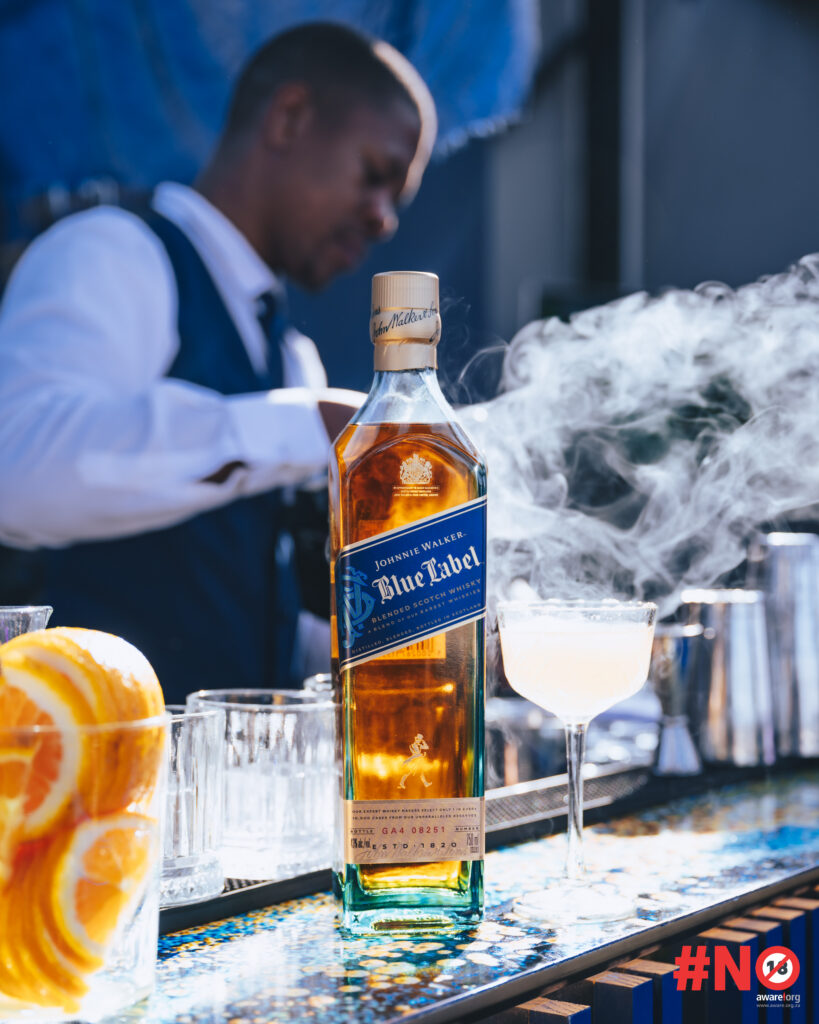
What one cask in 10,000 means for Johnnie Walker Blue Label
Blue Label takes its reference point from the Old Highland Whisky of 1867, a lineage that has been refined across generations of blending. What distinguishes it is not age alone but selection. Only one cask in 10,000 is chosen for the blend, each one assessed for depth and character rather than consistency.
That ratio is worth sitting with. It means the vast majority of what is laid down will never qualify, and that every bottle represents a long sequence of decisions to leave something out. Subtraction, in whisky as in design, is the more difficult discipline.
Composition over volume
The orchestral comparison is not decorative. A blend of this kind works the way an ensemble does, with each cask contributing a single voice that would be incomplete on its own. Honeyed sweetness carries the opening. Ripe fruit sits beneath it. Warm spice arrives next, and a wisp of smoke closes the arrangement without overwhelming anything ahead of it.
The result is a whisky that unfolds in sequence rather than all at once. The aroma opens before the palate is touched. The finish holds long after the glass is down, with the clarity of a final movement that stays in the room after the players have stopped.
The language of quiet distinction
There is a certain kind of presence that does not rely on being noticed, and Blue Label has always spoken to it. The people who reach for it tend to move the way a conductor does, shaping the room through composure rather than volume. Their authority is understood rather than declared.
This reads clearly in the South African market, where luxury has matured considerably over the past decade. The local consumer has become fluent in provenance and craft, and increasingly sceptical of anything that performs its status too loudly. Assurance without display now travels further here than it once did, and a whisky built on selection rather than spectacle fits that shift precisely.
A gift that recognises rather than impresses
Gifting is where Blue Label does its most interesting work. In business and in family life across South Africa, the gesture matters as much as the object, and the object is read closely for what it says about the relationship behind it.
Handing someone Blue Label is an act of recognition. It acknowledges achievement, influence or simply a standing that has been earned over time. The symmetry is neat. A whisky drawn from the rarest fraction of what is available, given to someone who occupies a similarly narrow category. One of one, on both sides of the exchange.
Why it endures
Rarity alone does not make something meaningful. Plenty of scarce things are forgettable. What gives Blue Label its longevity is that the scarcity is in service of the experience rather than the price tag, and that the whisky delivers on the promise the selection process makes.
Some people are not simply part of the room. They are the arrangement that gives the room its shape. For them there is a whisky that speaks the same language of depth, balance and patience, and asks for nothing louder than attention.
A symphony in every pour.
Sponsored Article


Related Articles
The BAM Collective’s CHROMISM: 7 Things That Made the Forest Runway Work
Thirty handcrafted looks by The BAM Collective, an operatic opening…
The Badge Has Changed: How South African Luxury Car Buyers Are Rewriting Automotive Status
For decades, South African luxury car buyers saw a German…
Inside Gucci’s Season of Causes: New York, Athens and Venice
In the space of two days, Gucci moved from a…