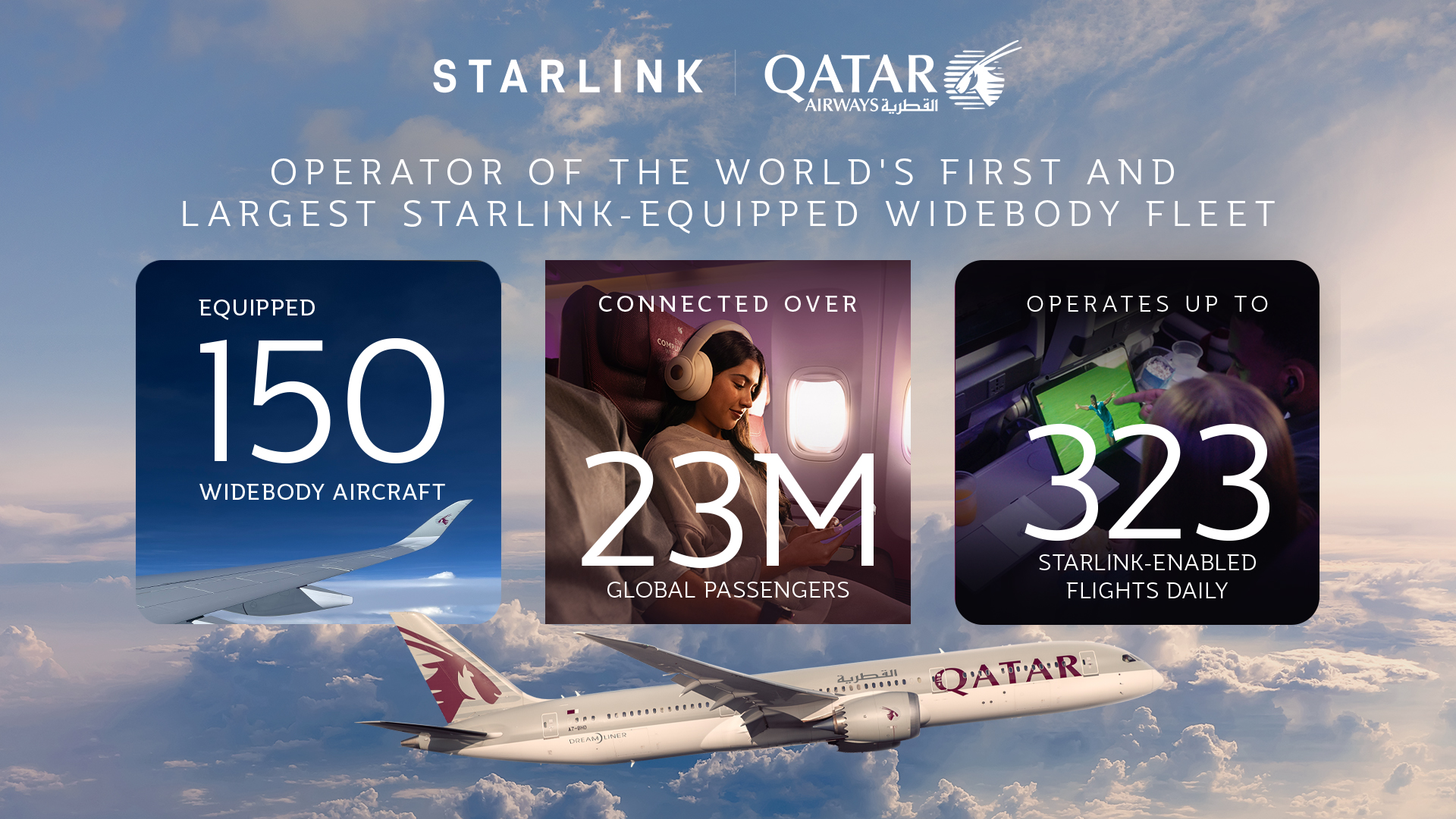
Qatar Airways has become the first airline in the world to fly a Starlink equipped Boeing 787-9, taking its connected widebody fleet to 150 aircraft. It is the latest milestone in the fastest satellite Wi-Fi rollout in commercial aviation, and one that has already carried more than 23 million connected passengers since October 2024. For the South African traveller who routes through Doha to Europe, Asia or the Americas, the question of whether the flight will have proper Wi-Fi is quietly becoming a settled one.
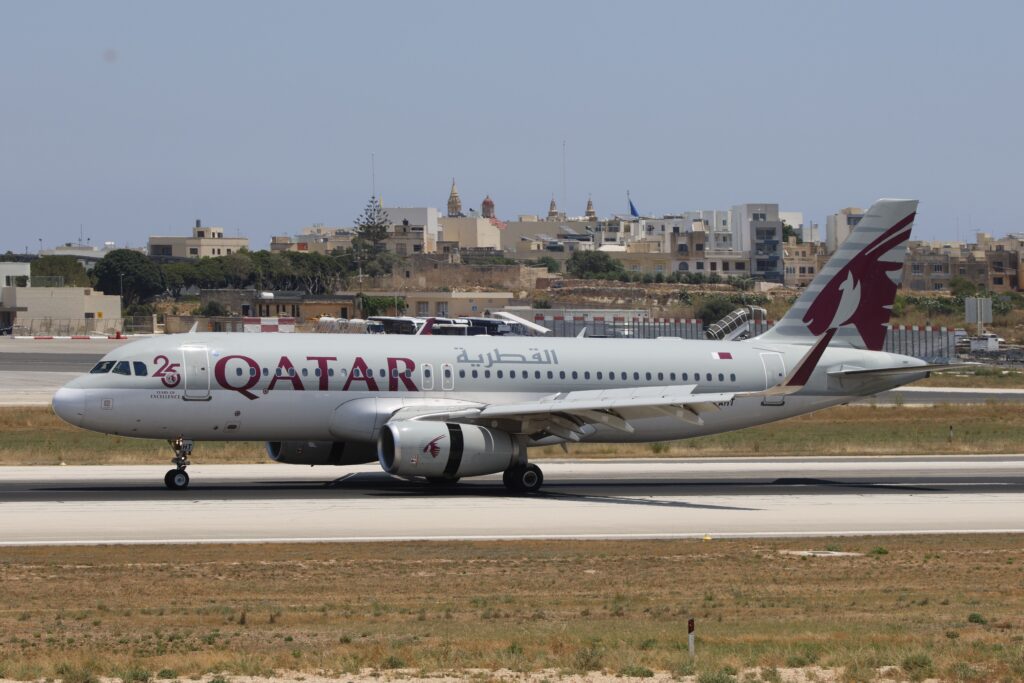
Image Credit:Drinu Cutajar
The end of the unreachable flight
There was a time, not long ago, when the long haul flight was one of the last places on earth where nobody could reach you. Some travellers treasured that. Most tolerated it. Inflight Wi-Fi, where it existed, tended to be slow, expensive and best suited to a single email sent in hope. Qatar Airways has spent the past two years dismantling that expectation, aircraft by aircraft, and the numbers now tell a story of scale rather than novelty.
The Doha based carrier has confirmed that it is the first airline globally to operate Starlink equipped Boeing 787-9 aircraft. That achievement follows the completion of its Boeing 787-8 sub fleet in seven months, and it brings the total number of Starlink equipped widebody aircraft in the Qatar Airways fleet to 150. More than half of the airline’s Boeing 787 fleet is now connected, and the carrier says it remains on track to finish the 787 programme by the end of 2026.
A programme built for speed
What distinguishes the Qatar Airways rollout is not simply that it happened, but how quickly. The airline completed its Boeing 777 programme in nine months and its Airbus A350 programme in eight. It now operates the world’s first and largest Starlink equipped fleets across the 777, the A350 and the 787, and its overall widebody installation programme has passed 83 per cent completion.
For an industry accustomed to measuring cabin upgrades in years, that pace is unusual. Retrofitting a widebody with a new connectivity system means taking a high value asset out of service, and every day on the ground is a day it is not earning. That Qatar Airways has pushed through three fleet types in under a year each, while maintaining a global schedule, says something about how seriously the airline regards connectivity as part of its product rather than an optional extra.
What 500 Mbps changes at 35,000 feet
The technical headline is speed of up to 500 Mbps, which is fast enough to make the cabin behave like a well connected office, living room or lounge depending on what the passenger needs it to be. The practical difference is subtler. Connectivity that works reliably from gate to gate changes how people plan a journey. Work can continue without the ritual of downloading everything in advance. A video call to family in Johannesburg from somewhere over the Indian Ocean stops being remarkable. Streaming, rather than the seatback library, becomes the default.
Qatar Airways was the first airline to offer Starlink globally on long haul and ultra long haul routes across six continents, and the service is free of charge. Passengers access it through Privilege Club membership authentication or enrolment, which folds the airline’s loyalty programme neatly into the experience. Gate to gate access may be unavailable at certain airports because of local regulatory requirements, a reminder that the sky is connected more consistently than some of the ground beneath it.
The scale of adoption
Since the service launched in October 2024, more than 23 million passengers have connected to Starlink across over 86,000 Qatar Airways flights. Up to 323 Starlink flights now operate daily. Those figures matter because they move the conversation from what is possible to what is ordinary. Free, fast Wi-Fi on a widebody is no longer a feature to be advertised at the gate. On this airline, it is increasingly simply how things are.
The airline frames the ambition plainly: a future where travelling no longer means stepping away from the digital world. Whether a passenger wants to work, stay in touch with loved ones or simply relax, the intention is that the cabin adapts to them rather than the other way around.
Why it matters from South Africa
Qatar Airways is a familiar presence for South African travellers, and Doha has become one of the main hubs through which this country connects to Europe, Asia and beyond. The airline’s Starlink network already spans flights to the Americas and Australasia, alongside key gateways across Africa, Europe and the Middle East. As more of the 787 fleet comes online, the likelihood of boarding a connected aircraft on any given long haul journey rises accordingly.
For the business traveller, that has real implications. A fourteen hour sector no longer has to be an interruption. For the leisure traveller, it removes one of the small anxieties of long haul flying, the sense of being unreachable. And for a market like South Africa, where distance from major global centres has always been part of the calculus of doing business, the erosion of that isolation in the air is worth noticing.
The wider picture
Connectivity has become one of the quieter battlegrounds in premium aviation. Cabin design, dining and lounges remain the visible markers of a carrier’s ambition, but the ability to stay online, without cost and without compromise, increasingly shapes how travellers choose between airlines that otherwise compete on similar terms. Qatar Airways has chosen to lead on this front at a scale no other widebody operator currently matches.
The 787-9 milestone is, on its own, a technical footnote. In context, it is evidence of a strategy nearing completion. When the final 787 is fitted at the end of 2026, the airline will have done something that would have sounded improbable only a few years ago: made an entire widebody fleet as connected as the ground it departs from. The rest of the industry will have to decide how long it can afford to keep passengers waiting.


Related Articles

Fewer, Better: 8 Beauty and Wellness Finds That Earn Their Place
This season’s most interesting beauty and wellness launches aren’t adding…
FH55 Hotels and the Art of Changing Without Letting Go
After seven decades of welcoming guests in Florence, Rome and…
Weylandts Sibaya and the Showroom Built for Lingering
On 3 October 2026, Weylandts opens its new KwaZulu-Natal home…