

Standfirst
Gucci The Store Show, the first collection in which Demna sets out his full vision for the House after a year of studying it. The show was held in a space built to look like a retail space, previewing the aesthetic of the Gucci stores to come, and the collection was presented as two collections inside one show, menswear then womenswear, in the order the lines appear in store. For a House whose commercial future rests on what happens inside its shops, the choice of setting is the story.
The show that was staged as a shop
Fashion shows are usually built to look like anything except retail. The Store Show did the reverse. Gucci presented its latest collection in a space conceived as a retail space, which turned the runway into a preview of what the House intends its stores to become.
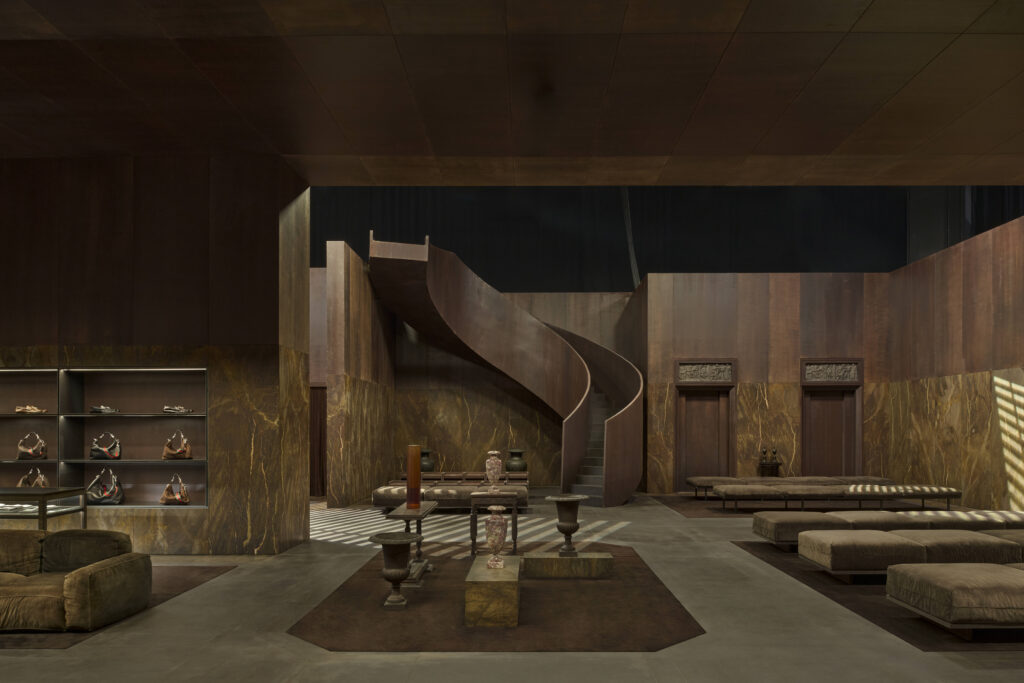
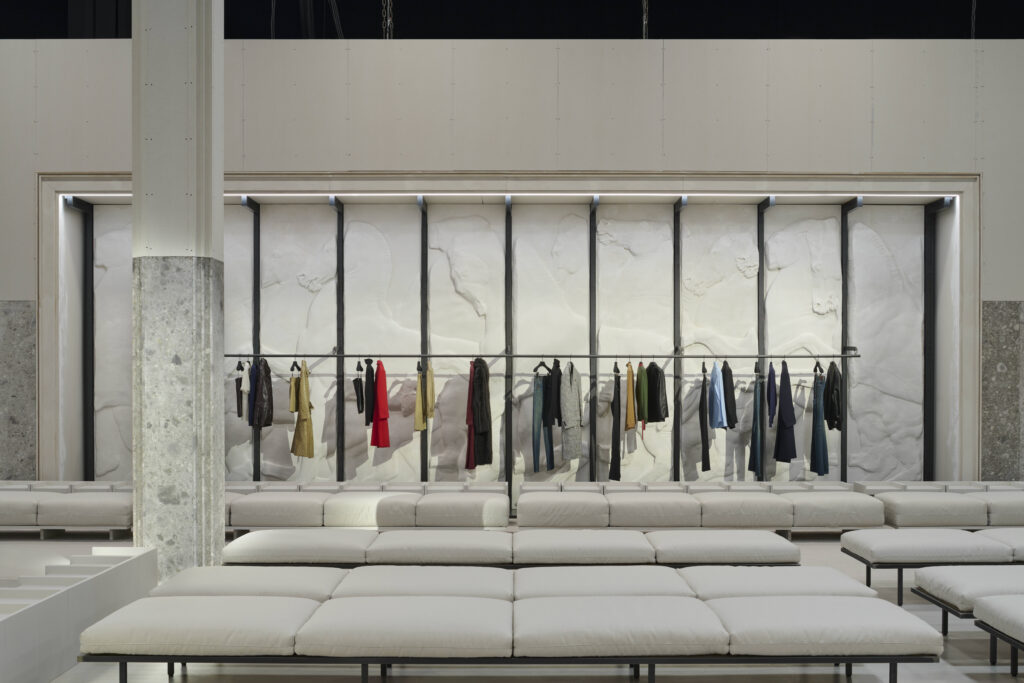
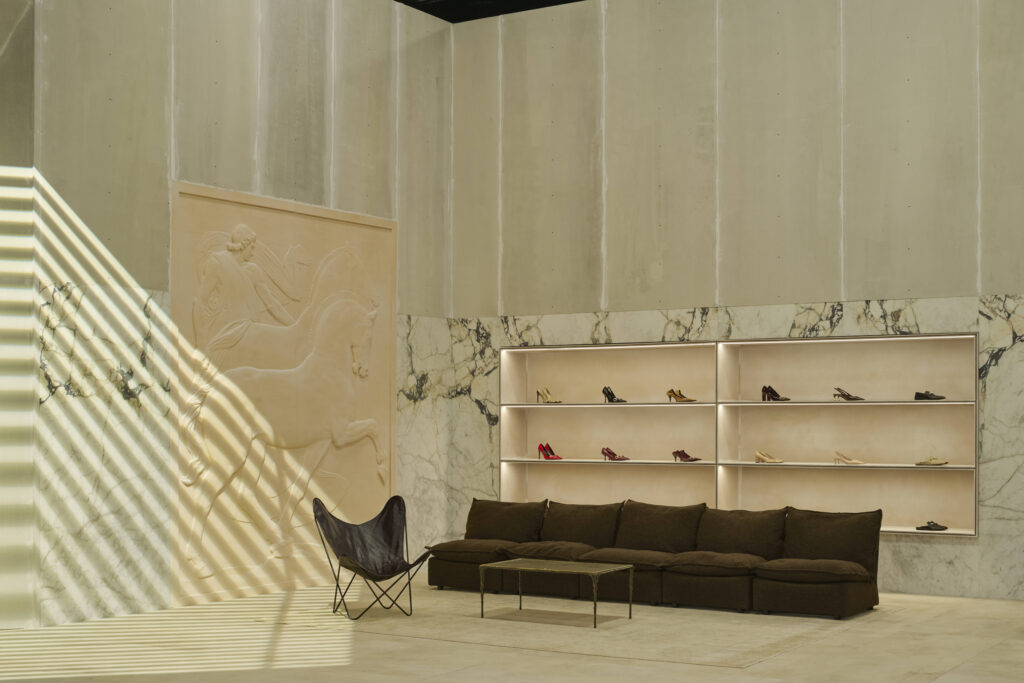
That is not a set design decision. It is a commercial one. Stores are where luxury is actually transacted, where the idea of a brand either survives contact with a customer or does not, and where the majority of a House’s revenue is decided. Putting the store at the centre of the show says that the next phase of Gucci will be judged on the shop floor rather than on the runway.
The structure of the show made the same argument. Menswear and womenswear unfolded in succession, two collections inside one show, mirroring the way the lines are offered in store. It is an unusually literal piece of staging, and a signal that the House is thinking about sequence, adjacency and the customer journey rather than spectacle.
A year of research, stated plainly
The Store Show arrives with an unusual document attached: a letter from Demna setting out what he concluded about Gucci before designing for it.
“My first year at Gucci was dedicated to understanding and formulating what Gucci stands for,” he writes. “The conclusion of my research is that Gucci stands for being rooted in the desire to belong to a more glamorous world, and in the audacity to remake that world in your own image.”
He is more precise still about the mechanism. “Gucci is about luxury that wants to be seen. It is about the tension between propriety and sensuality.” The House, in his reading, “begins with polished bourgeois respectability, but its most memorable periods introduce eccentricity, danger or sex appeal into that respectable world.”
The most useful line for anyone trying to read the strategy is this one: “Gucci’s history is carried by personalities, identities and lifestyles, not purely by design codes.” It explains why the collection is organised around characters rather than themes.
Three personalities, one palette
The collection is built on what Gucci describes as the complete palette of personalities embodying Demna’s Gucci: The Rebellious Aristocrat, The Snob and The Eccentric.
Casting a collection as a set of characters rather than a mood is a discipline, not a gimmick. It forces each look to answer to someone, and it gives the retail teams a language for the floor. A customer who recognises herself in one of three characters is a customer who knows which rail to walk towards, which is exactly the problem a store is built to solve.

Propriety first, then trouble
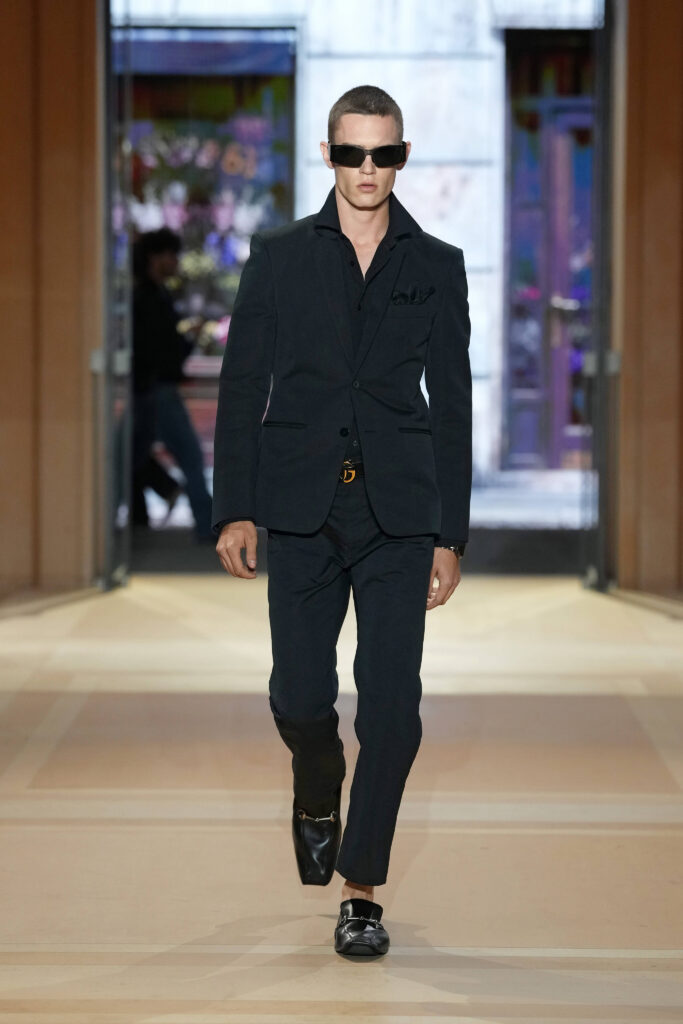
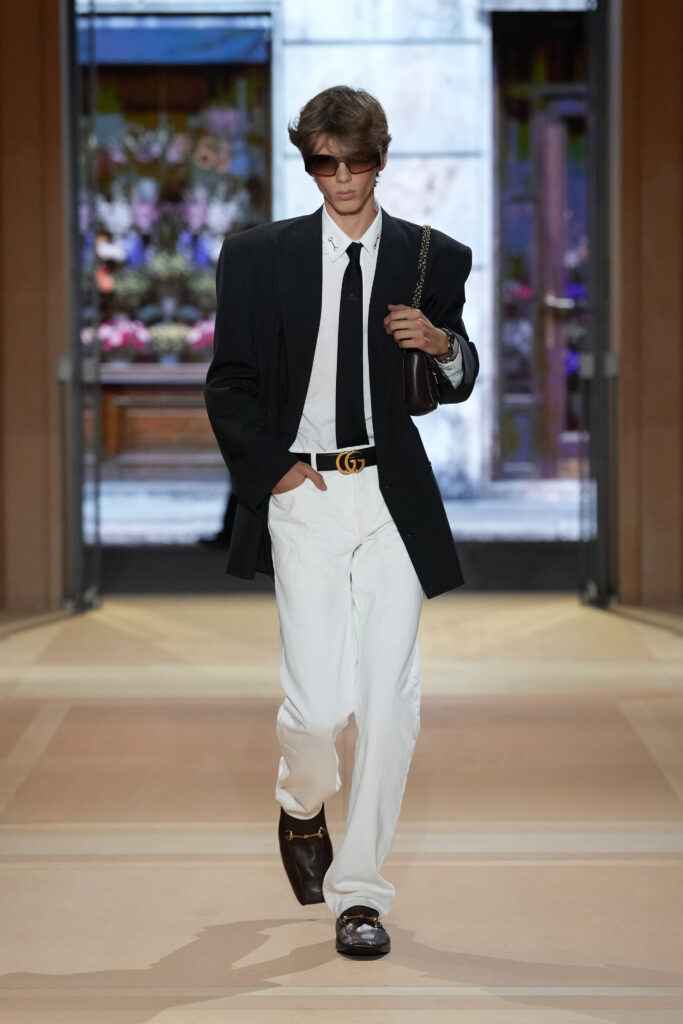
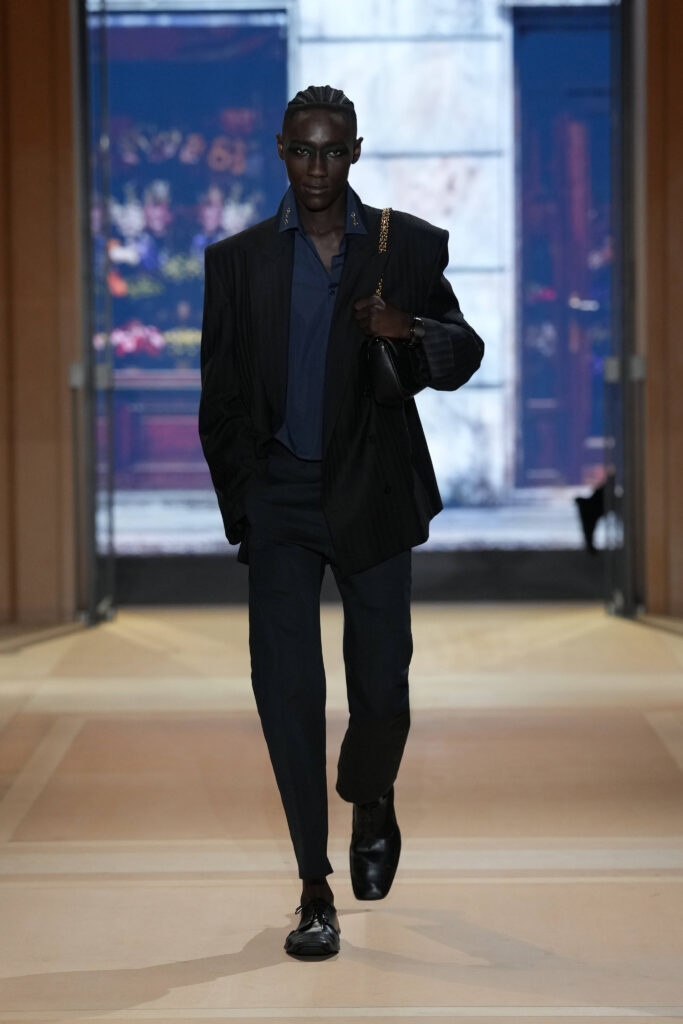
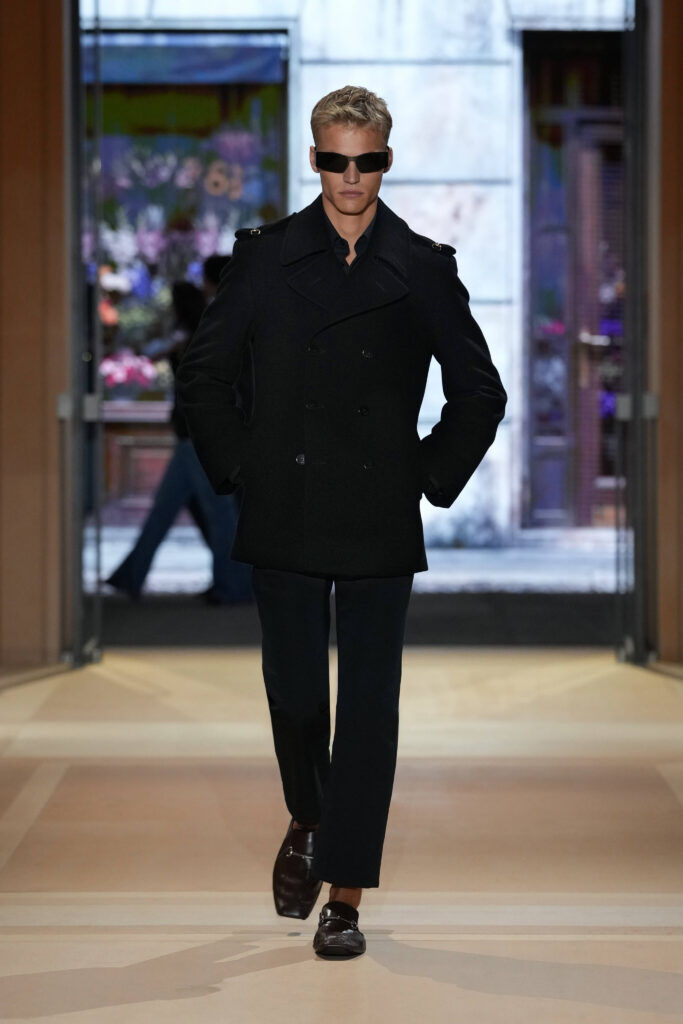
The lineup opens with cropped trousers and loafers worn without socks, a quintessentially Italian attitude used to anchor the silhouettes. A study of posh dress codes gives way to sharp, fitted tailoring with pagoda shoulders in stonewashed textiles. Demna’s menswear proposition then arrives: cropped, puff-shaped outerwear worn over slender, slouchy denim in precious and authentic fabrications.
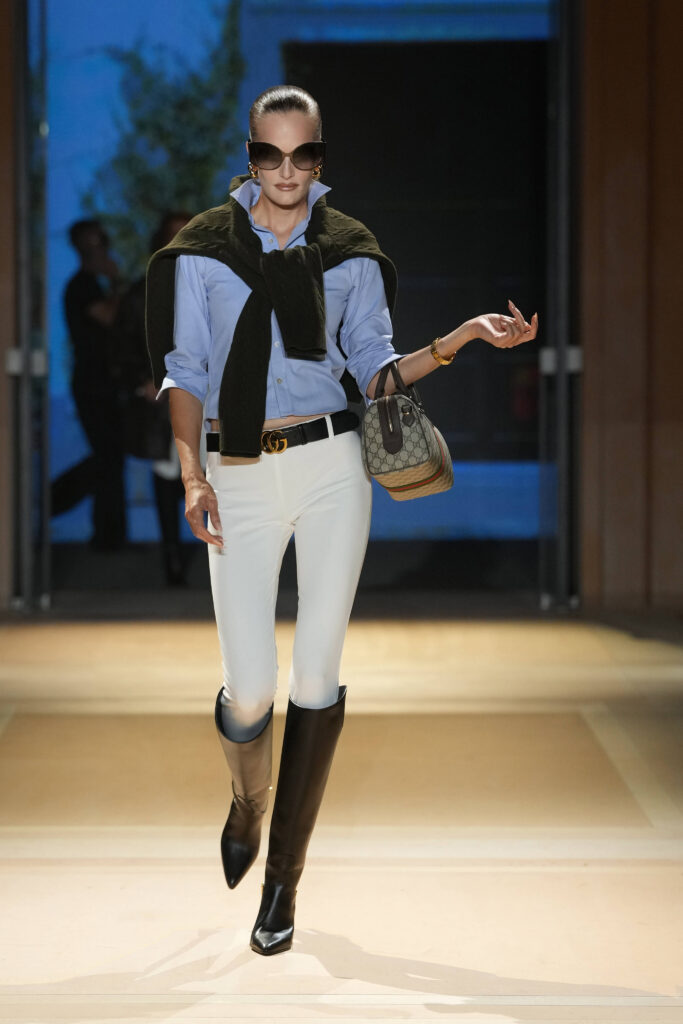
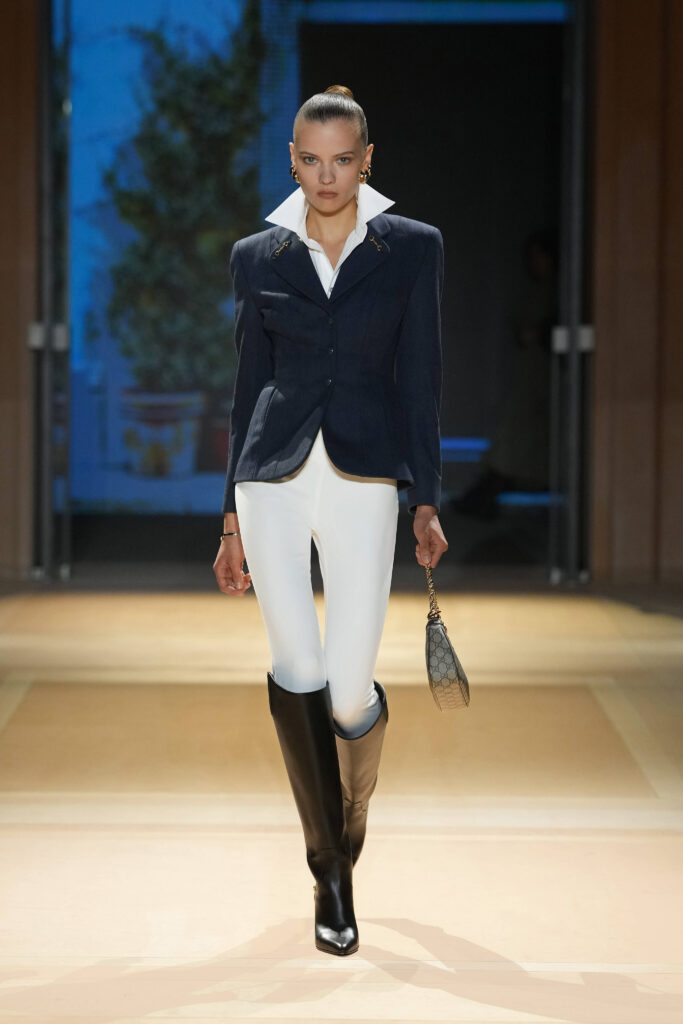
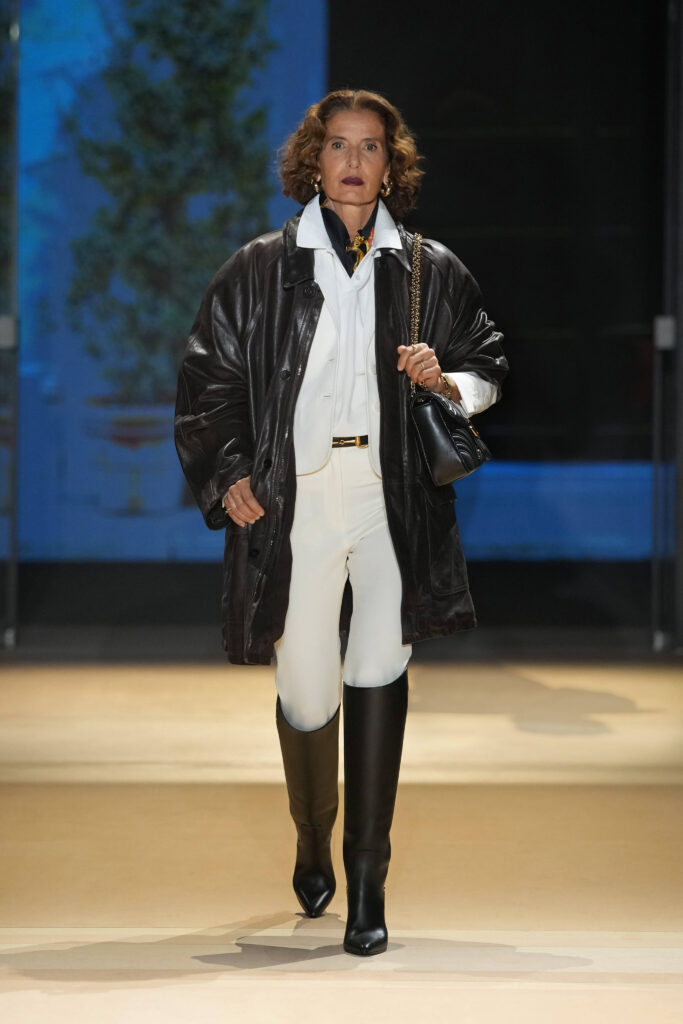
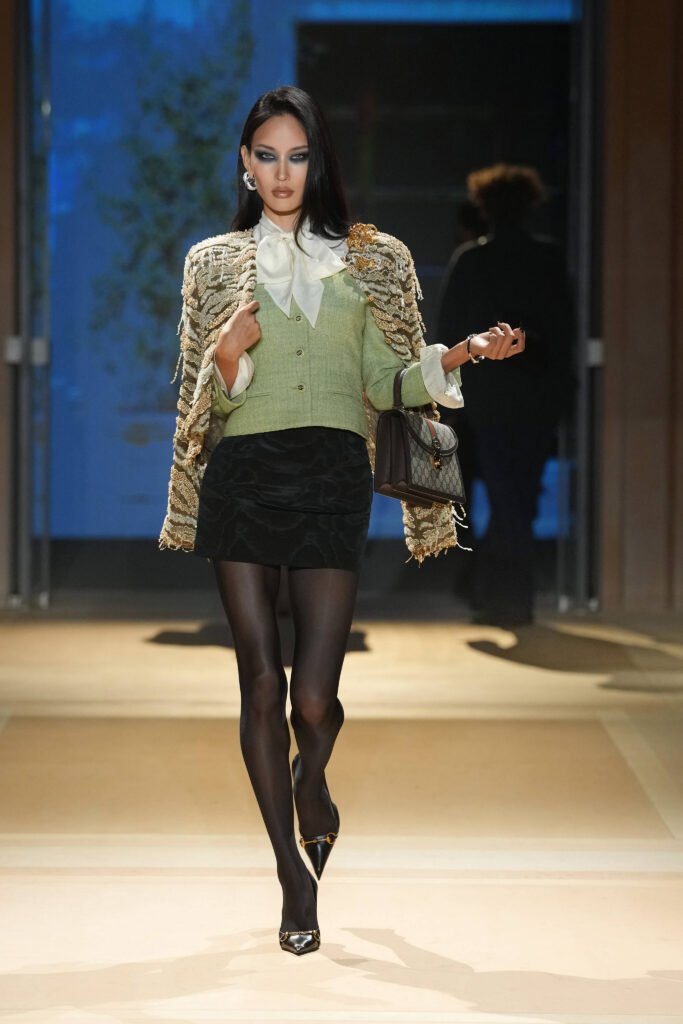
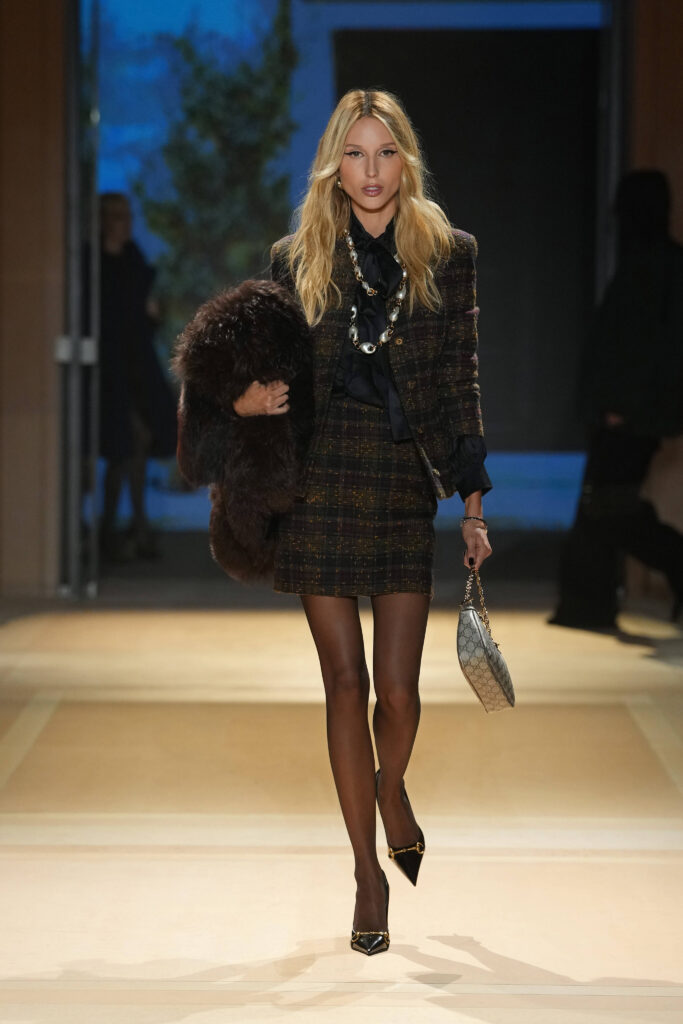
Womenswear opens on bourgeois dress codes with an equestrian edge before moving into sharply tailored pantsuits and skirt suits with a metropolitan undertone. Severe pagoda-shouldered garments are constructed without pads, which keeps them light, and lead into the women’s version of the fashion silhouette: puff-shaped jackets over masculine shirting, rugby tops and sharply pleated A-line skirts in genuine Scottish tartans, leather and checked wool.
The House’s equestrian identity is handled with deliberate scale play. Oversized and miniature Horsebits punctuate the collection, including the 3X cummerbund belt, which cinches “New Romantic” ensembles combining sharp-shouldered blouses with drainpipe trousers and layered jewellery.
Then the register drops. Delicate lingerie lends nocturnal glamour to voluminous shearling outerwear, before precisely cut, fluid eveningwear closes on a slinky “gravity” gown held in place by a hanging teardrop weight. It is the clearest expression of the propriety and sensuality tension Demna describes, worked into a single garment.
Where the business actually sits
Accessories are where a luxury House earns, and this collection treats them as such rather than as an afterthought.
A sleek “uptown” Horsebit tote carries a polished exterior over an organised interior of several compartments. Flexible “bamboo” handles made from leather sections accent handbags and slouchy messengers. The 3X translates a belt carrying three Horsebits into a slimline party bag. A bamboo-shaped mini duffle is positioned as a daily companion. The GG Marmont and the Ophidia, both signature styles in the House’s DNA, reassert themselves within Gucci’s bourgeois heritage.
Footwear follows the same logic. A sleek driver sole shoe with an angular toe is Demna’s first take on a modernised Gucci loafer. A slim slipper trailing overlong fabric tassels reads as a boudoir shoe made ready for outdoors. A femme fatale attitude is distilled into an angular metal heeled stiletto, and monogrammed stirrups finish a knee-high equestrian boot.
Read together, it is a coherent commercial argument: keep the icons working, add three or four new shapes with enough character to be recognised at a distance, and let the silhouette do the talking.
Back to The Savoy
The collection returns the House to its origins at The Savoy hotel in London, where the idea of Gucci began among aristocrats, artists, creatives and people from entirely different worlds.
Demna uses that history as a brief rather than a footnote. “I want Gucci to embody that same spirit today: a place where those who may appear to have nothing in common can meet, connect and inspire one another. Because Gucci is a space of possibility, a place where anyone can become whoever they choose to be.”
A hotel lobby is a useful model for a shop. Both are public rooms where strangers pass through, and nobody is required to explain themselves. If that is the reference for the Gucci stores of the future, it suggests retail spaces designed for lingering rather than for transacting quickly, which is a meaningful shift in a category that has spent a decade optimising for speed and queue management.


Why it registers in South Africa
South African luxury consumers have been paying attention to store experience for some time, and with good reason. Local flagship retail sits within a small number of precincts, so the environment carries disproportionate weight: it is often the only physical encounter a customer will have with a House between collections.
A show that puts retail design at its centre therefore lands differently here than a pure runway spectacle would. It gives buyers, mall developers and brand partners in Johannesburg, Cape Town and Durban something concrete to anticipate, and it signals that the store environment is being treated as part of the creative output rather than as a franchise problem to be solved later.
There is a second point worth noting. Demna’s reading of Gucci rests on characters, identities and the audacity to remake a glamorous world in your own image. That is a proposition with real traction in a market where personal style is understood as authorship rather than compliance, and where the most influential local dressers have always treated luxury as raw material rather than as instruction.
CONCLUSION
Most debut visions are announced through clothes and explained afterwards. The Store Show reverses the order. It states the thesis, sets it inside the room where the business actually happens, and asks to be judged on whether the two hold together.
What makes it interesting is the modesty of the framing. Demna’s letter does not claim to reinvent Gucci. It claims to have read it properly: a House that begins in respectability and becomes memorable only when something less respectable is let in. Whether the stores of the future deliver on the room he describes will take longer to assess than a season. But as a statement of what Gucci believes it is for, this is the least ambiguous the House has been in years.


Related Articles

Ulysse Nardin Sets the Freak in Stone: 15 Watches for 180 Years
The Freak first appeared in 2001 and changed modern watchmaking.…
Sandringham Private Game Reserve and the Sixteen: The Making of Africa’s Next Master Trackers
At Sandringham Private Game Reserve, the newest property in the…
Moët & Chandon and the Art of the Occasion: Champagne Day Comes to South Africa
From Friday 23 to Sunday 25 October, Moët & Chandon…

