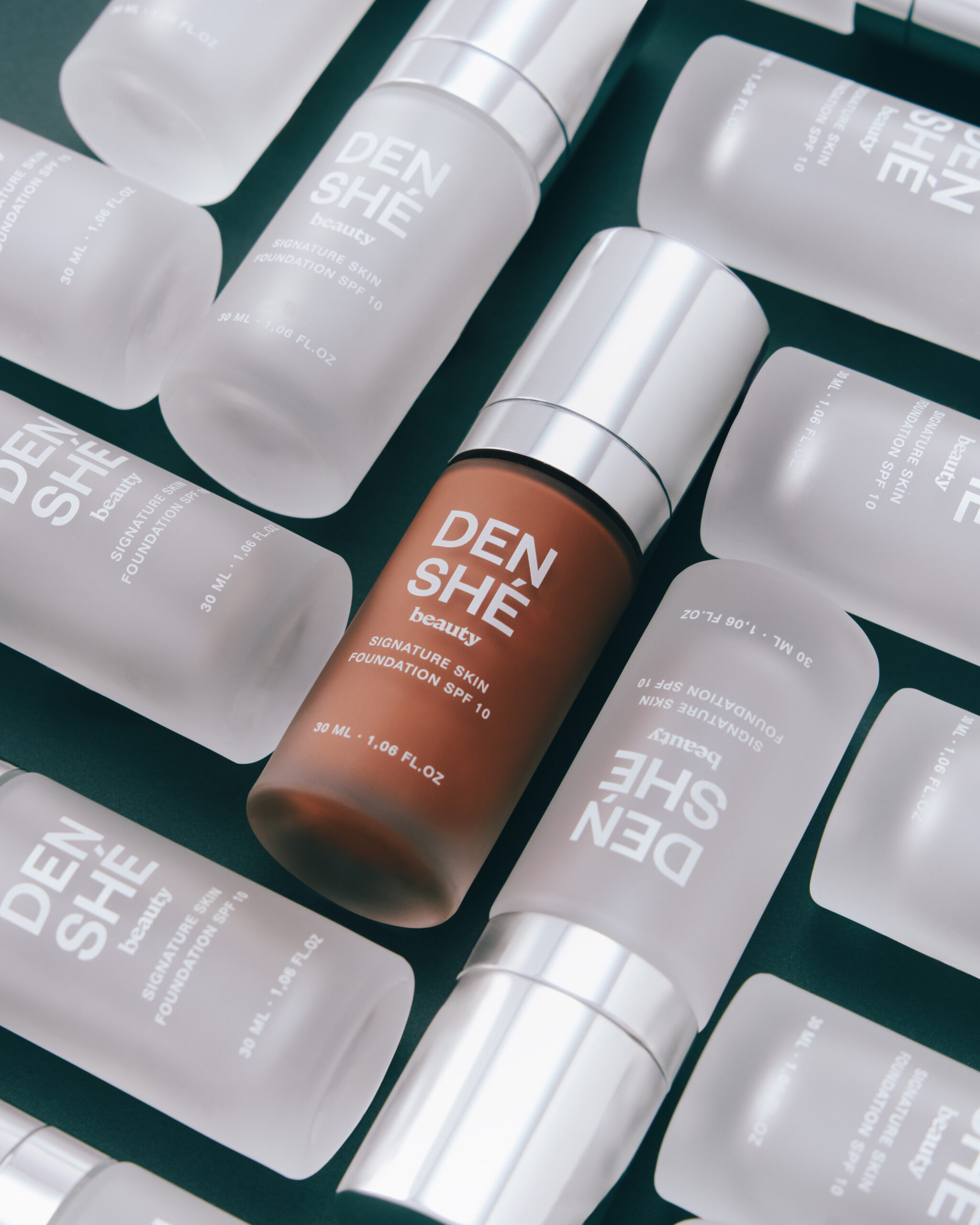
A new Johannesburg beauty house has done away with the shade range entirely. At its atelier in Illovo, Denshé Beauty measures a guest’s skin across several points of the face, neck and décolletage, then makes a single foundation for her and no one else. For a category that has spent a century asking women to settle for the nearest available option, it is a pointed argument, and it is being made from South Africa.
What the industry calls a match
Anyone who has stood at a beauty counter with three testers striped along her jaw knows the ritual. You pick the one that offends least, carry it home, and spend the following months quietly compensating. You warm it. You cut it with something lighter. You blend harder at the jawline and hope the light is kind. The industry calls this a match. Denshé Beauty calls it rounding, and has built a business on refusing to do it.

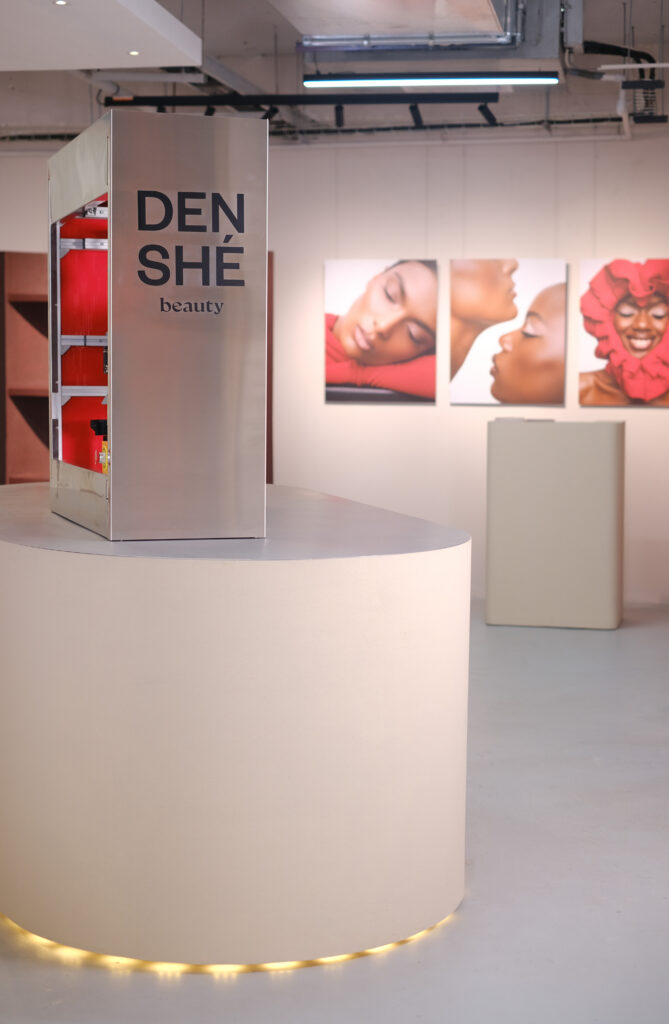
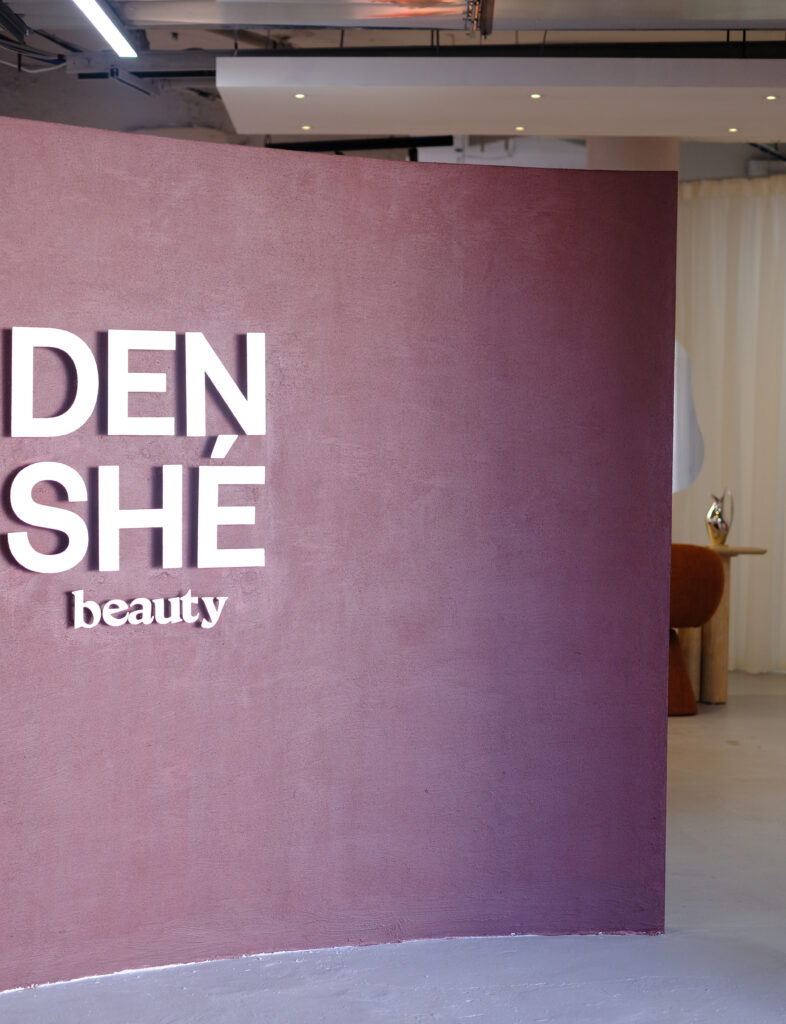
The house launched this year from an atelier at 204 Oxford Road in Illovo, founded by Denise Mulenga-Ottesen, a commercial lawyer, together with Frederik Ottesen, a mechanical engineer and professional toolmaker. Its single product, the Signature Skin Foundation, has no shade range at all. Nothing is made in advance. Nothing sits on a shelf waiting for a face close enough to justify it.
The problem with the shelf
Foundation has been produced the same way for roughly a hundred years. A brand decides on a set of shades before it meets a single customer, and every woman who does not fall neatly within that set is asked to adapt. Recent years have brought wider ranges and more of them, which is progress of a kind, though it leaves the underlying logic untouched. The range still comes first. The face still has to fit it.
“A wider shelf is still a shelf,” says Mulenga-Ottesen. “We built the opposite. Nothing is made until we measure you, so we are not finding your closest match, we are making your only one. Every woman deserves to be met precisely, not approximately.”
Denshé begins its archive with the skin that ranges made in advance have historically served worst, which is also, by the brand’s reading, the skin most of the world actually has. What follows from that starting point is less an act of inclusion than a change of method. Because no formula exists until someone is measured, the system has no centre to sit at and no edge to be pushed to. Whoever is in the room is the reference point.
Two appointments, two days
Denshé structures the purchase as a ritual across two visits, which does more work than it might first appear. It moves the transaction away from the counter and towards the fitting room.
The first appointment, The Shade Consultation, is complimentary and unhurried. A single shade specialist attends to one guest, beginning with conversation and moving into the reading: measurements of tone and undertone taken across the face, the neck, the décolletage and wherever else the true shade demands. Skin is never one colour, and the honest version of a match tends to hide in the places a single swatch never reaches.
From those readings the specialist draws a benchmark shade from the Archive of Skin, the brand’s growing database of shades mapped across the spectrum, and applies it so the guest can judge texture, finish and wear on her own face before committing.
Denshé is careful about what this benchmark is. In a couture atelier, a garment is first pinned in plain calico to find the line before anything is cut in cloth. The toile is a guide, never the dress. The benchmark works the same way. It is often the closest shade a guest has ever seen on herself, and it is still not hers. That small remaining distance, between nearest and actual, is the entire premise of the house.
Where pigment meets engineering
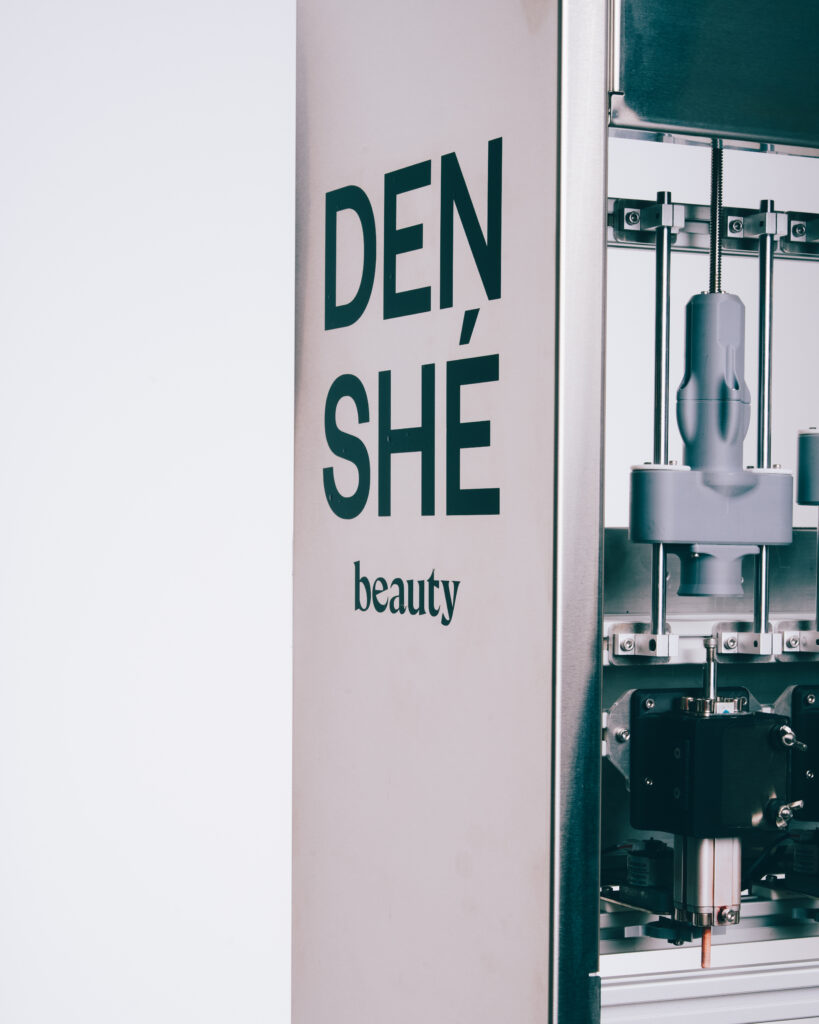
Making that distance disappear required a machine. The Denshé Matchmaker, developed in house with Ottesen, is a dispensing system of five pigment channels that measures and releases to within a hundredth of a gram. A guest’s reading runs through it and a single foundation comes out the other side, formulated for one face.
It is a quietly telling detail that the technology at the centre of a beauty brand was built by a toolmaker. Precision of this order belongs to the workshop rather than the laboratory bench, and it lends the proposition a credibility that language alone could not.
At the second appointment, The Shade Fitting, the guest meets a formula that did not exist before her. Her shade is then recorded and held, reproducible to the same hundredth of a gram at every refill, and measured afresh should her skin change with season, age or circumstance.
A system, not a shelf
The commercial intelligence of Denshé sits in what happens next. Every formula produced deepens the Archive of Skin, which means each new guest is met a little closer to her mark than the last. The model improves as it serves more people rather than straining under them, which is precisely the problem that has kept made to measure beauty rare and largely theoretical.
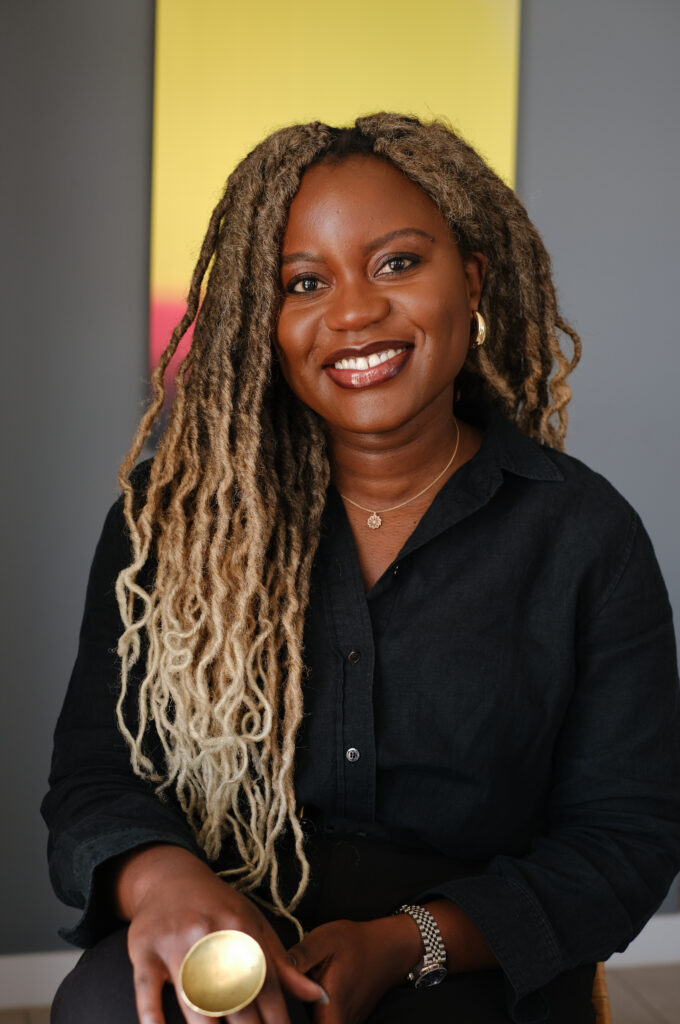
“We are pan-African and global by design,” says Mulenga-Ottesen. “A shelf stays where it is put. A system travels.”
That distinction matters for South African luxury more broadly. The country exports craftsmanship well and has done for years, in jewellery, in fashion, in wine. Exporting method is a harder and more valuable thing. If the Matchmaker travels as the brand intends, what leaves Johannesburg is not a product line but a way of making one.
The object itself
The Signature Skin Foundation is manufactured in Italy: a soft matte with natural radiance, lightweight and breathable, buildable from medium to full coverage, with SPF 10, housed in frosted glass with an aluminium coated pump and cap. The sun protection reads as a courtesy rather than a substitute for proper daily SPF, which in this climate remains a separate discipline.
The bottle is deliberately restrained, and it should be. When the shade inside belongs to one person, the packaging has little left to prove.
What precision buys
There is a particular fatigue that comes from years of being offered an approximation of yourself, and it is not really about cosmetics. Denshé has understood that the appeal of its method is not technical superiority but recognition, the small and disproportionate relief of being met exactly rather than nearly.
The atelier model brings its own constraints, of course. Two appointments across two days asks more of a customer than a ten minute stop at a counter, and the house is betting that women who have spent a lifetime compensating will consider that a fair exchange. On the evidence of the proposition, it is not a reckless bet.
What Denshé is really testing is whether luxury beauty can be built the way tailoring is, one client at a time, with a record kept and a relationship that deepens with every visit. Johannesburg is an unexpected place for that experiment, which is rather the point. The shade range was never a law of physics. It was only a manufacturing convenience, and conveniences have a habit of ending in the places least served by them.
The Denshé Atelier is in Illovo, Johannesburg. For trading hours, bookings and further details, visit Denshe Beauty website.


Related Articles

The BAM Collective’s CHROMISM: 7 Things That Made the Forest Runway Work
Thirty handcrafted looks by The BAM Collective, an operatic opening…
The Badge Has Changed: How South African Luxury Car Buyers Are Rewriting Automotive Status
For decades, South African luxury car buyers saw a German…
Inside Gucci’s Season of Causes: New York, Athens and Venice
In the space of two days, Gucci moved from a…