
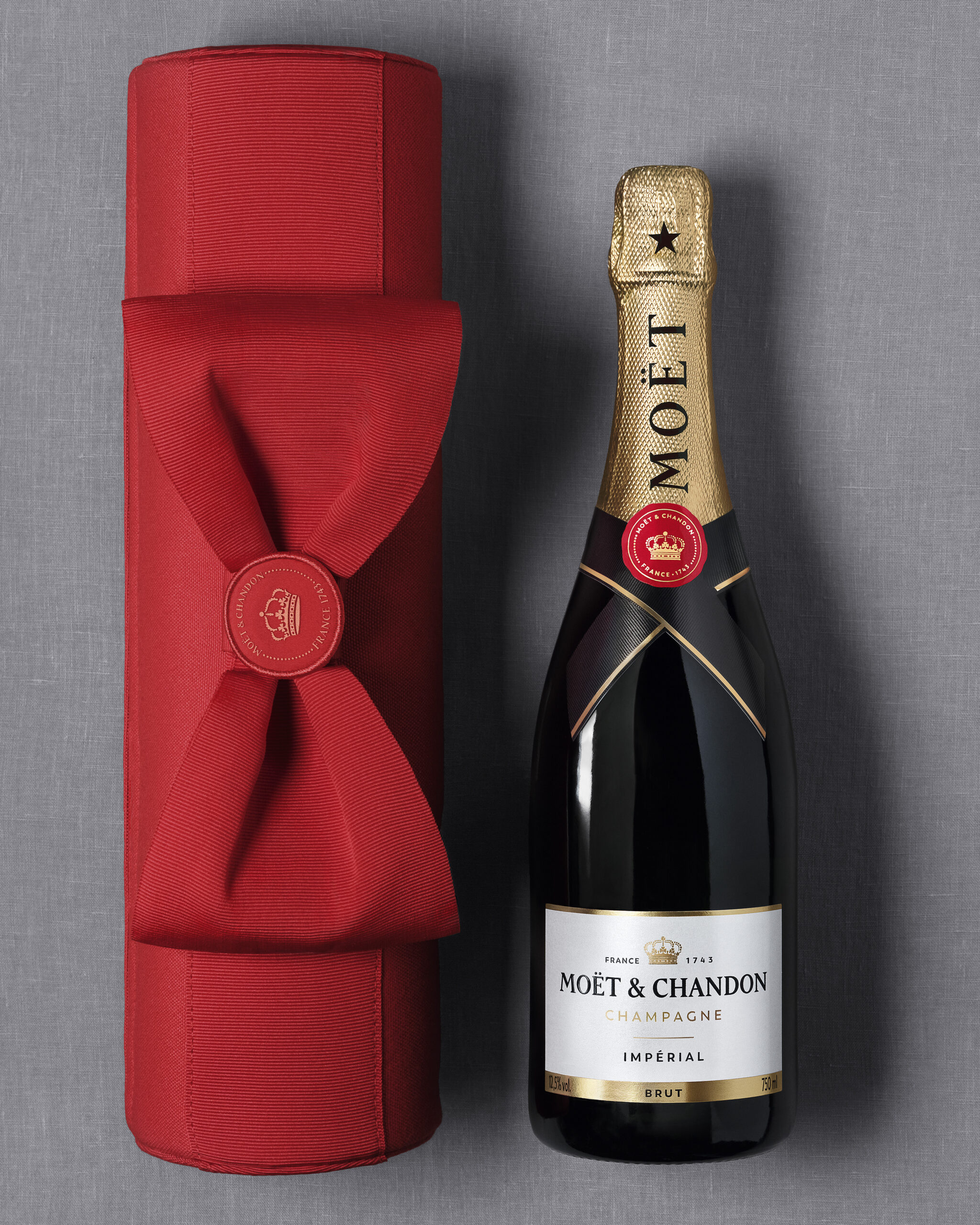
In 1886, Moët & Chandon tied a black ribbon around the neck of its bottles, and it has stayed there ever since. This festive season, that signature turns into a bow: a personal accessory that makes a bottle of champagne into a considered gift. The change is small, but the history behind it is long, and it says a good deal about how we give now.
A Signature Worth Untying
Few luxury houses change the details their customers recognise without thinking. A colour, a stitch or a ribbon at the neck of a bottle are the cues that build a brand over generations, and they are rarely touched. That is what makes the Moët Bow interesting. Moët & Chandon has not added something new to the bottle. It has gone back to one of its oldest codes and given it a new job.
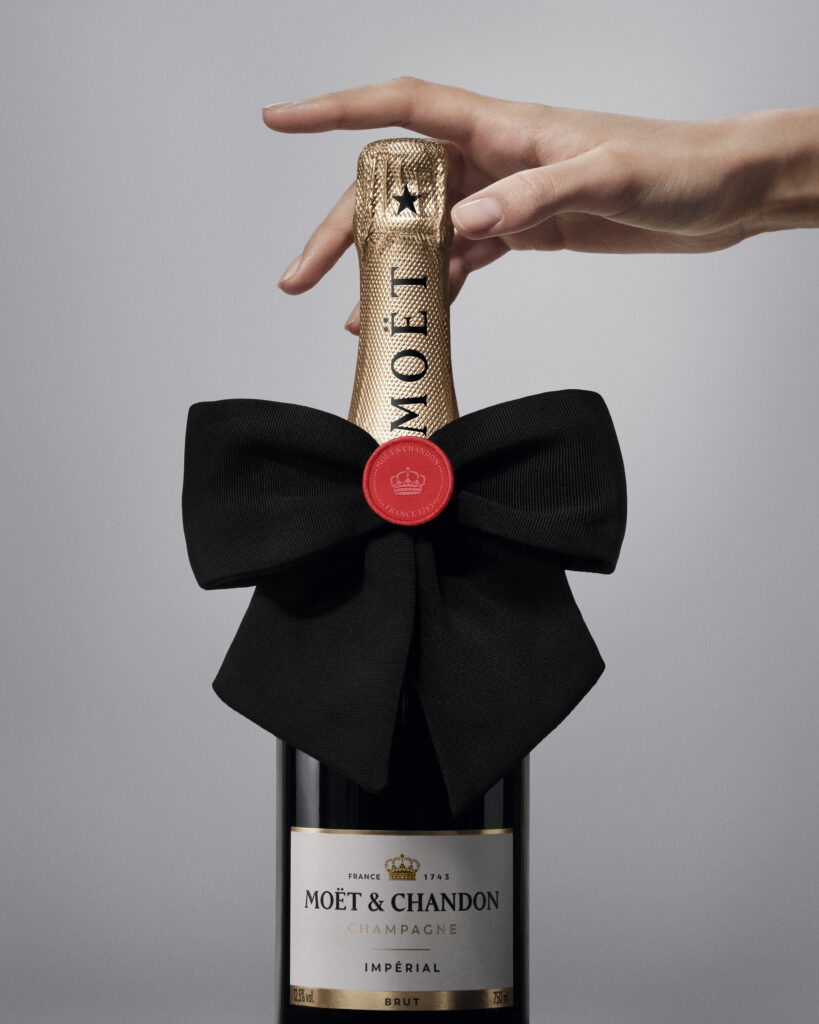
The black tie first appeared on Moët & Chandon bottles in 1886, and over time it became one of the Maison’s most recognisable emblems. In the 1990s it gained a fine gold thread, which refined it without changing its character. Now, 140 years after its introduction, the tie becomes a bow. The Maison describes it as an evolution rather than a break, and the logic holds. A tie dresses a bottle. A bow presents it.
From Dress Code to Gesture
The Moët Bow is not attached to the bottle. It can be removed and used again to dress another bottle, which turns a piece of packaging into something closer to a keepsake. It comes in black, red and green, and it borrows its shape from the ribbons on wrapped gifts. As a result, a familiar bottle now carries a sense of anticipation that the original tie never had.
There is a cultural point here too. The tie spoke the language of formality: black tie, dinner jackets, a certain distance. The bow speaks the language of generosity. It suggests that champagne is something to give away, and that the person handing it over has thought about who will receive it.
The Gift Begins Before It Is Opened
Personalisation is at the heart of the collection. Both the Moët Bow and the new Bow Pouch can be customised with colours and stylised pins, and those pins can carry initials or a year that matters to the recipient. At the Bow Atelier, a dedicated space for personalised gifting, guests can choose a bow colour, select pins, pick ribbons and add a bespoke greeting card.
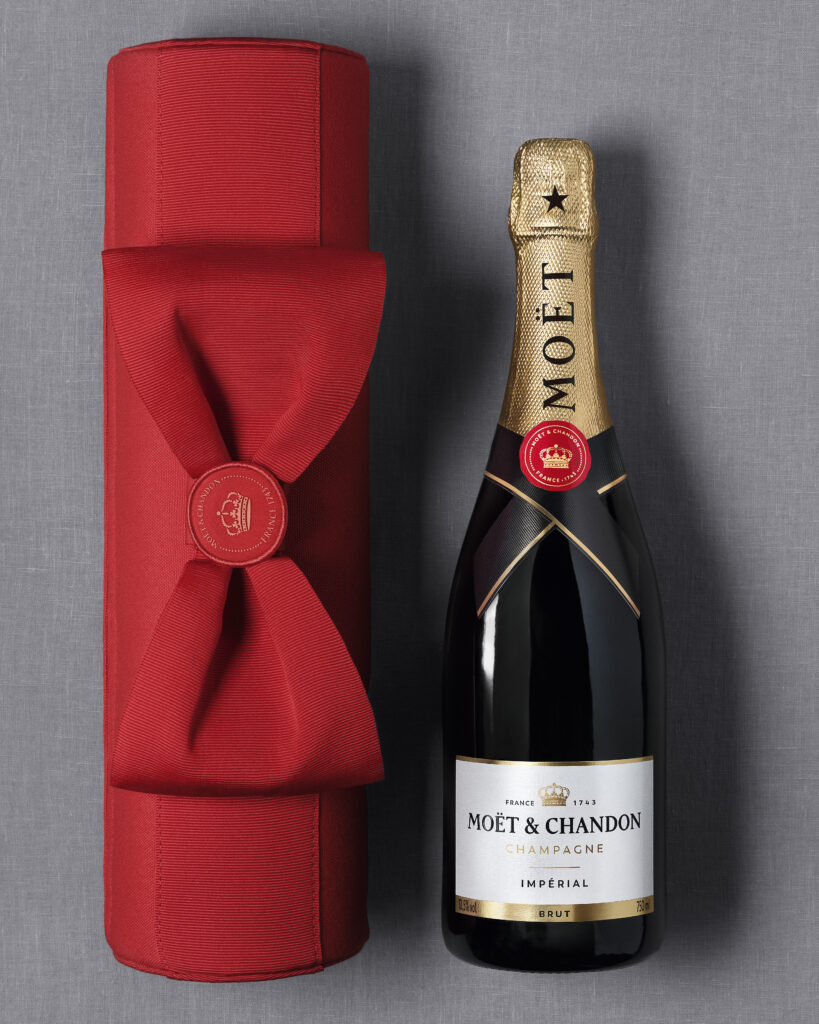
Alongside the bow, the Maison has introduced the Bow Pouch, designed to keep a bottle chilled, and a new Bow giftbox that dresses the bottle for the season. Together they reflect a shift that runs through luxury gifting more broadly. Price and label still matter, but the more valued gift is the one that clearly carries the giver’s hand. A year engraved on a pin does something a price tag cannot: it records a moment.
A Summer Table in Johannesburg, a Winter One in Épernay
The festive season looks different depending on where you spend it. In the Northern Hemisphere it means short days, candlelit interiors and tables set against the cold. In South Africa, December brings long, warm evenings, lunches that run into sunset and gatherings that move outdoors. Here, a pouch that keeps a bottle cold on the way to a friend’s garden is less an indulgence than a practical courtesy.
The collection is available from 1 November 2026 in selected retail and at the Moët & Chandon Bars in Épernay, with a playful, colourful campaign behind it. Whatever the setting, the idea is the same: the bottle is there to bring people together.

Choosing What Goes Inside the Bow
The bow sets the tone, but the choice of champagne still decides the occasion. For shared moments, Brut Impérial (offered in a special festive edition) and Brut Impérial Rosé remain the natural choices. Each year, Cellar Master Benoît Gouez works to balance the freshness and fruitiness of the wines, which makes them suited to a full table.
For a gift with more weight, Grand Vintage comes in an elegant black robe and reflects the character of a single harvest year, with the 2016, 2009 and 2000 vintages released from the Maison’s cellars. For a dinner that calls for something rarer, there is Collection Impériale No. 1, the Maison’s prestige cuvée. It is crafted over 20 years through three maturation methods (stainless steel, oak and lees) and is the house’s most intricate statement on the art of blending.
Behind all of it is a house founded in 1743. It draws on the largest terroir in Champagne and is present in more than 150 countries. Few champagne houses have better standing to reinterpret their own heritage.
The Part You Keep
A tie is meant to stay where it is tied. A bow is meant to be untied, kept and used again. That may be the most thoughtful detail of this collection. Most bottles of champagne are opened and finished in a single evening, but the Moët Bow is designed to outlast the bottle. Long after the glasses are cleared, something of the gesture remains: a pin with a year on it, a ribbon in a drawer, and the memory of who was at the table.


Related Articles
Nespresso and Swarovski Make a Case for the Festive Cup
The Nespresso Swarovski festive collection brings two very different crafts…
Heineken House F1 Edition Makes the Case for Watching Formula 1 Together
Heineken House F1 Edition brought invited guests together in Johannesburg…
Beyond The Frame: Oakley Redefines Morden Luxury At Sandton City
Where technical innovation meets contemporary style, Oakley’s newly opened Sandton…

