
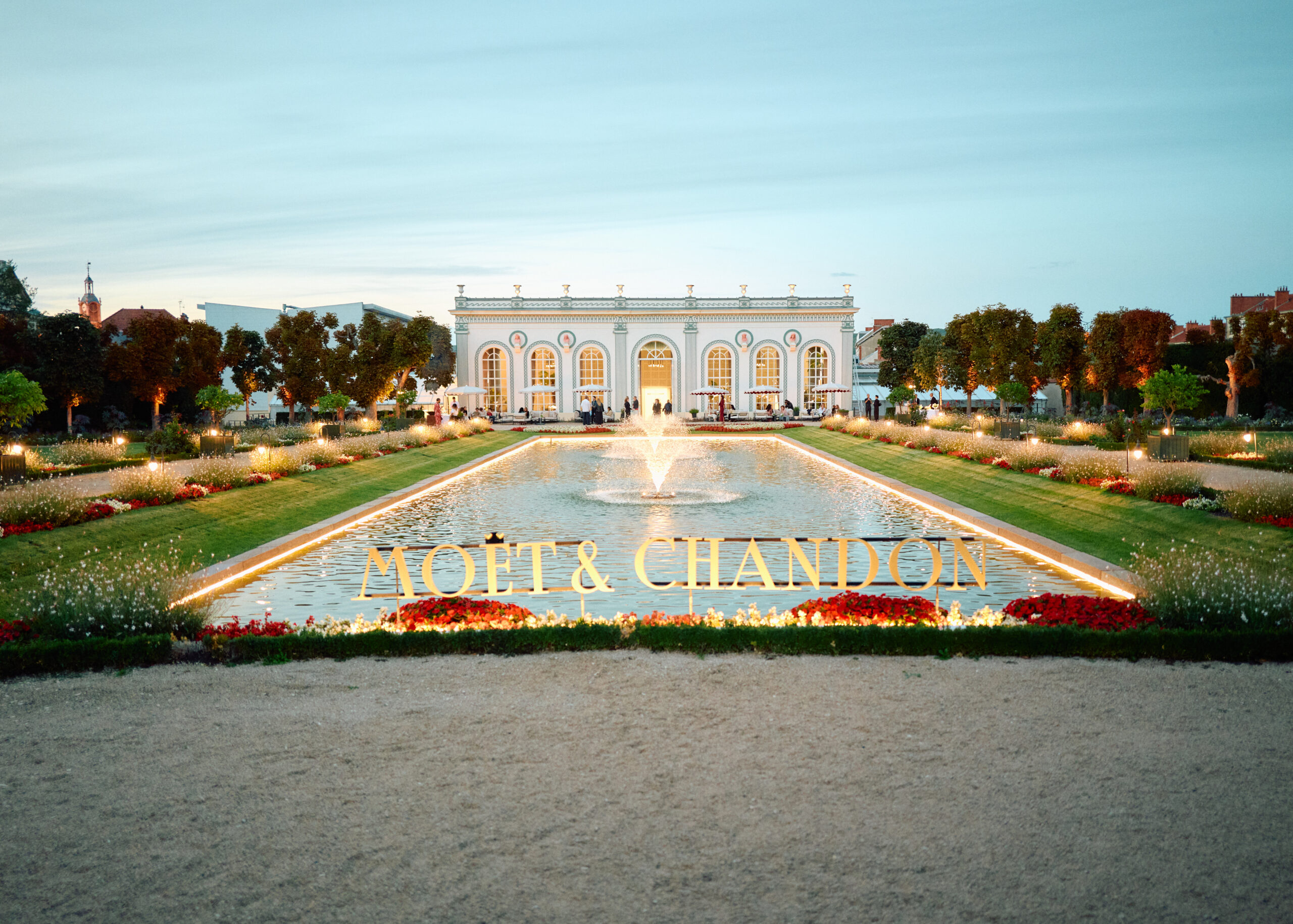
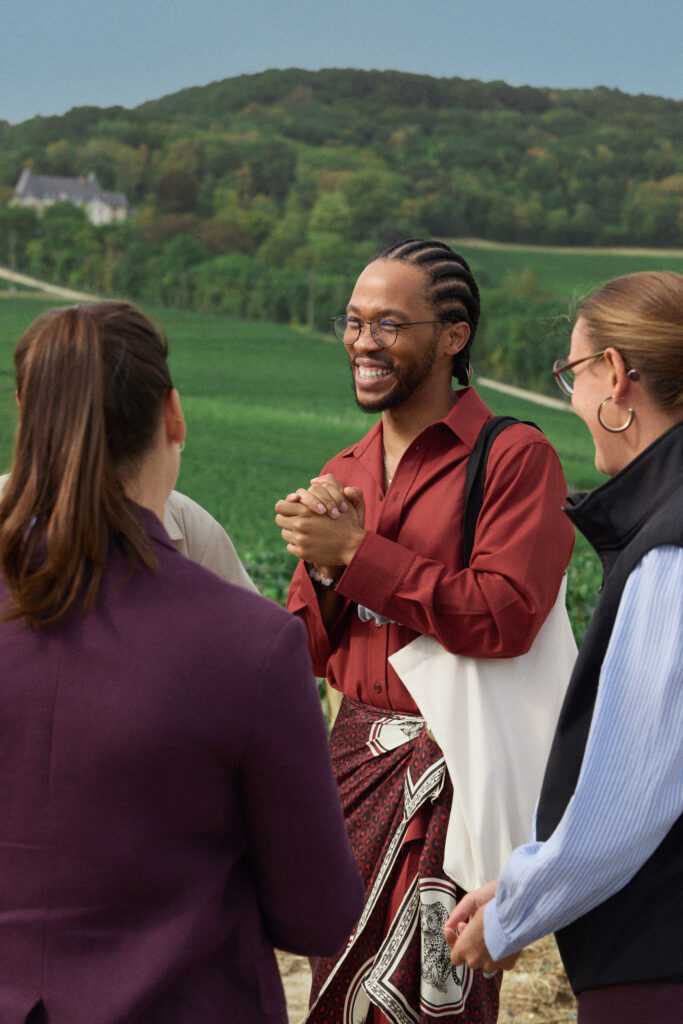
Once a year, Moët & Chandon opens its Champagne vineyards to a small group of guests for the Harvest Experience, a week spent inside the decisions that shape a cuvée long before anyone lifts a glass. South African designer Thebe Magugu is among those who have followed the route from vineyard to cellar. For an African luxury audience that increasingly buys on provenance, it is an instructive lesson in everything a label cannot tell you.
The week that decides the year
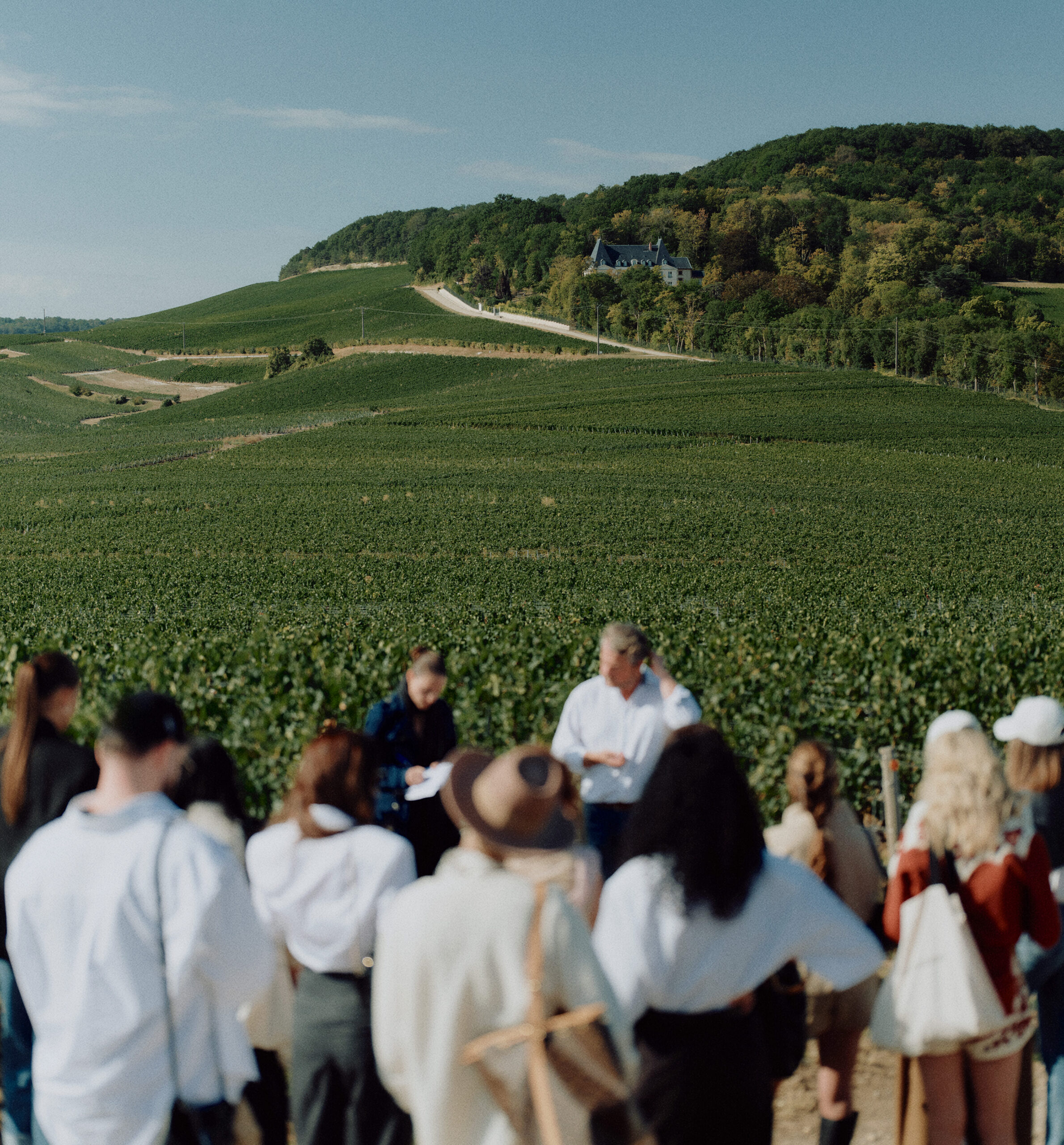
A vineyard in the days before picking is a place of constant small judgements. Berries are tasted plot by plot, sugar and acidity weighed against each other, and a date is set that cannot be taken back. Moët & Chandon draws on 1,300 hectares across Champagne, a mosaic of Grand Cru and Premier Cru sites, and each plot is harvested only once it has reached its optimum potential. Bunches are selected by hand, then sorted optically at the press. The logic is simple and unforgiving: everything that reaches the press must arrive intact.
Some seasons test that discipline harder than others. The Maison’s 283rd harvest followed a growing season of climatic extremes, from severe frosts to repeated heatwaves, and produced an absolute record for earliness, with picking beginning on 14 August, the earliest start recorded in the history of Champagne. Early analyses pointed to exceptional grape health and sanitary quality alongside limited yields, with a balance of maturity the Maison describes as unprecedented. In Champagne, a small and healthy crop is often the beginning of an interesting story.
Following the grape
The Harvest Experience is structured around the lifecycle of the wine rather than the reputation of the house, which is what gives it its editorial interest. The route begins in the historic vineyards acquired in 1811 by Jean-Rémy Moët, near the Loge Montaigu, where Estate Manager Reynald Loiseau sets out the shape of the vineyard holdings and his first readings of the season.
From there guests move to the Oiry pressing centre, where fruit becomes juice, and on to the Mont Aigu winery, where alcoholic fermentation is already under way under Winery Manager Daniel Carvajal. The young wines are tasted before blending, a stage most drinkers never encounter and the one that tells you most about a house’s intentions.
Lunch is taken at Fort Chabrol, the first research centre Moët & Chandon established in 1900 and now part of a UNESCO listed landscape. The journey ends in the Galerie Impériale, the cellars where the Maison’s oldest work is kept, guided by a Maison Ambassador.
“The energy of the harvest has to be experienced to be fully understood. It’s when an entire year of observation, care and precision comes together. Every decision is crucial, from the maturity of the grapes to the rhythm of the picking. It’s a pleasure to welcome guests into this essential moment for our Maison, where they can see, take part in and understand the harvest from within.”
said Loiseau in a statement.
Nature as a working partner
Fort Chabrol also houses Natura Nostra, the Maison’s biodiversity programme in Champagne. The project builds ecological corridors that connect natural reservoirs so that plant and animal species can move and complete their life cycles. By 2025 the Maison had planted 85 kilometres of hedgerows across its own vineyards and those of partner winegrowers, drawing on a network of 2,300 growers who receive support ranging from environmental assessments and plot planning to species selection and help with funding applications.
The plantings do more than shelter wildlife. They hold water, protect soil and maintain the character of a Champagne landscape that has held UNESCO World Heritage status since 2014. For a category that sells provenance, this is the unglamorous work that keeps the promise credible.
The table as the final stage
Hospitality is where the Maison translates all of this into something a guest can taste. Dinner is hosted at the Château de Saran, one of the Maison’s most recognisable residences, alongside Cellar Master Benoît Gouez. The award winning actress Jessica Chastain has taken part in the harvest and hosted at that table.
Executive Chef Jean-Michel Bardet builds menus around the wines rather than beside them, selecting ingredients to meet the aromas, textures and nuances of each cuvée across Brut Impérial, Grand Vintage and Collection Impériale.
“The harvest season reminds us that Moët & Chandon’s savoir-vin is a collective craft brought to life by people, place and nature. Behind every cuvée, there is precision and passion, and the desire to create wines that move people,” said Gouez. “At the Château de Saran, the table becomes the place where this collective work is shared. Through each pairing, guests discover the character of each cuvée and the emotion and generosity behind it.”
Gouez said in a statement issued by the Maison.
Why it matters here
The South African presence in Champagne is not incidental. Thebe Magugu’s work has long been built on process, provenance and the discipline of making, which is precisely the register the Harvest Experience operates in. Lerato Tshabalala of Your Luxury Africa has also joined the experience to document the harvest for an African luxury readership.
That readership has changed. South African buyers of fine wine and champagne increasingly choose on the basis of site, season and method rather than label recognition alone, and they expect the houses they support to account for how they farm. A programme that opens the press house and the fermentation hall speaks directly to that shift.
Champagne’s great houses have spent centuries perfecting the moment the cork leaves the bottle. What the Harvest Experience argues, quietly and with some confidence, is that the more interesting moment happens months earlier, in a vineyard where someone decides that today is the day.


Related Articles

Moët & Chandon and the Art of the Occasion: Champagne Day Comes to South Africa
From Friday 23 to Sunday 25 October, Moët & Chandon…
Weylandts Pulls Up a Chair at The With, Its First Bar, for Design Week
For more than sixty years, Weylandts furniture has lived in…
Porsche Mission S: The Return of Restraint
Porsche has unveiled the Mission S, a vision model that…

