
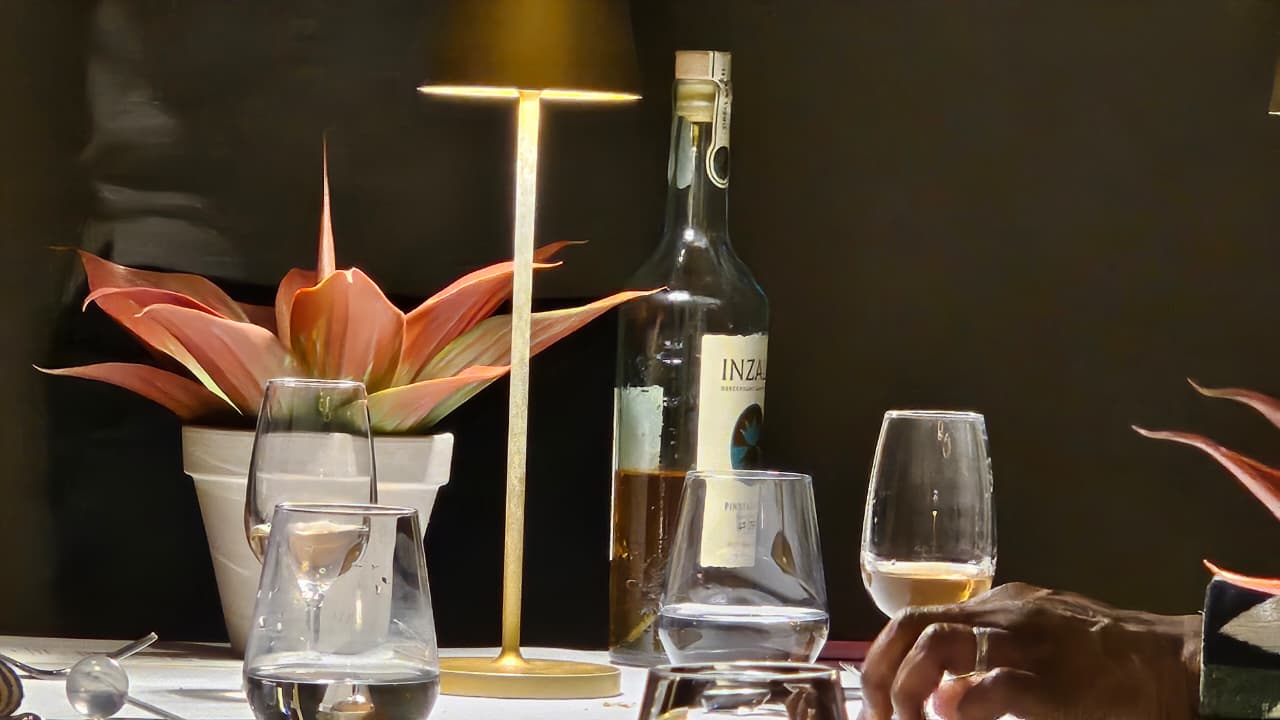
Inzalo, the South African agave spirit made from wild agave grown in the Klein Karoo, spent an evening at Four Seasons Hotel The Westcliff Johannesburg, where Executive Chef Rudi Liebenberg built a menu around it. What started as a passing question about whether agave could hold its own beside food turned into a quiet study in provenance and restraint. Wine has had centuries to perfect its relationship with the dinner table. Agave, at least in this country, has only just been invited.
An Unlikely Guest at The Westcliff
Some pairings are obvious. Others need a chef, a chance conversation and just enough curiosity to ignore the rules.
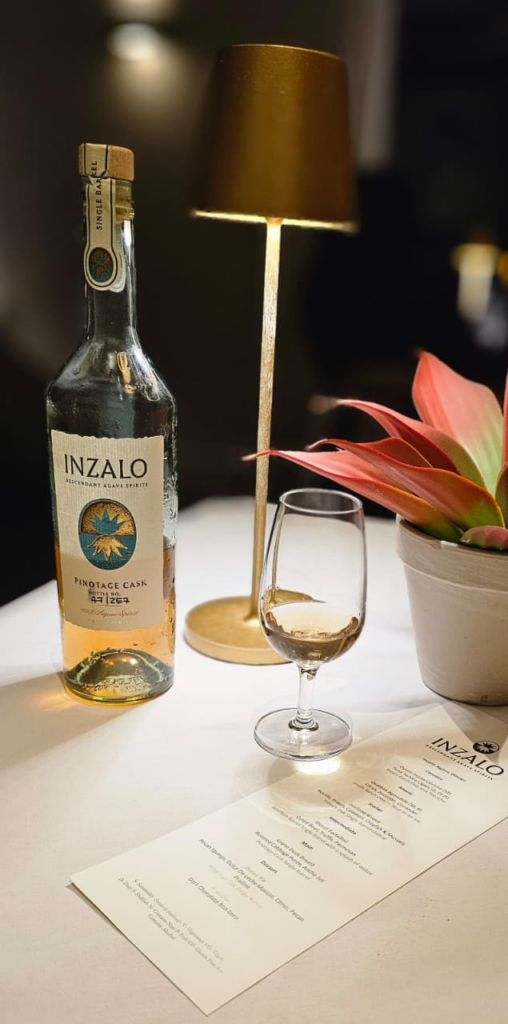
That, more or less, is how a South African agave spirit found its way onto the table at Four Seasons Hotel The Westcliff Johannesburg. Sebastian O’Keefe was visiting the hotel when conversation with Executive Chef Rudi Liebenberg turned to Inzalo, the spirit he produces from wild agave grown in the Klein Karoo. The Chef tasted it. Then came the question that changed the evening before it even existed.
Why not pair it with food?
It was an odd idea, which was exactly why it was worth trying.
A Conversation That Became a Menu
Very little about the evening followed a template, largely because no template existed. Agave has spent most of its commercial life in a glass with ice and citrus, treated as a prelude to dinner rather than a partner in it. Wine, by contrast, arrives at the table with several centuries of matchmaking behind it, a vocabulary the industry understands and a set of expectations everyone at the table already shares.
A South African agave spirit had none of that. What Inzalo had instead was a chef prepared to cook around it rather than under it, and a producer willing to let the spirit be read on its own terms.
That distinction mattered more than the menu. Chef Rudi was not building courses to flatter a familiar formula. He was testing what happened when a spirit with genuine character met a kitchen with an equally clear point of view
Why a South African Agave Spirit Behaves Differently at the Table
A South African agave spirit rewards attention in a way that surprises people who meet the category only at speed. It carries smoke, minerality and a vegetal sharpness that a glass of wine rarely offers, and those qualities do not sit politely in the background. They argue with the plate, and the argument is the interesting part.
In the intimate setting of the Yellow Room, course by course, the unlikely guest began to look remarkably comfortable. Citrus shifted the spirit. Smoke found smoke. Richness softened its edges. A bite altered the next sip, and the sip, in turn, changed the plate.
What began as an odd pairing became a conversation. The best pairings do not simply match. They reveal something that was hiding.
A South African Agave Spirit Without a Borrowed Accent
There was also something distinctly South African about the exercise, and it went well beyond the contents of the bottle.
A South African agave spirit, born from a landscape not traditionally associated with premium agave, sat confidently at the table of one of Johannesburg’s most recognised luxury hotels. It did not present itself as an alternative to tequila or as a substitute for anything imported. No imitation was required, and none was offered.
That confidence is the part worth noting. South African luxury has often built its case by measuring itself against somewhere else, borrowing a European reference point to explain a local product. Inzalo’s proposition runs the other way. The question it raises is whether this country can develop its own language around agave, its own provenance, character and identity, rather than translating someone else’s.
Luxury becomes far more interesting when it stops borrowing another accent.
The evening at The Westcliff suggested that the answer is already in the glass, and that the hospitality side of the industry is willing to meet it halfway. A hotel of that standing choosing to build a menu around a South African agave spirit still early in its life is not a small gesture. It is an editorial position, expressed through food.
The Question the Evening Answered
Sebastian brought the spirit. The Chef brought the food. Neither arrived with a rule book, and somewhere between the first course and the last, the two became an odd couple. Or perhaps an odd pair.
At the risk of taking the wordplay a step too far, Chef Rudi may even have played au pair for the evening, introducing Inzalo to polite society and making sure it behaved itself at dinner. It did. Mostly.
By the end of the evening the question was no longer whether a South African agave spirit belonged at the table. It was why nobody had invited it sooner.
Sometimes the pairing you remember is the one that had no business working. And when the final plates disappeared and the evening moved inevitably towards last call, there was really only one sensible response.
Last call? We would call for Inzalo. And, after the Yellow Room, we would probably ask what the Chef is serving with it.
Source: BizNewsTV


Related Articles

Moët & Chandon and the Art of the Occasion: Champagne Day Comes to South Africa
From Friday 23 to Sunday 25 October, Moët & Chandon…
Weylandts Pulls Up a Chair at The With, Its First Bar, for Design Week
For more than sixty years, Weylandts furniture has lived in…
Porsche Mission S: The Return of Restraint
Porsche has unveiled the Mission S, a vision model that…

