
There is a moment at any live sporting event when the scoreboard stops being the point. It happens in the aisles and the lounges, in the conversations that pick up between games and the strangers who become temporary allies over a single rally. South Africa’s first Premier Padel tournament, staged at SunBet Arena, Time Square in Pretoria, was full of these moments, and they may prove more telling than any of the results.
For the first time, local fans watched many of the world’s top-ranked padel players compete on home soil. The Pretoria Premier P1 delivered the on-court drama such an occasion demands, but the more instructive spectacle was in the stands. Thousands turned out across the week, and the energy rarely dipped, whether a marquee match was underway or the courts sat briefly quiet.
A country ready to be hosted
The clearest takeaway was almost sociological. South Africans have developed a real appetite for major international sporting events, and they arrive expecting more than a fixture. They come for the occasion: the atmosphere, the sense of belonging to something with global reach that has, for once, come to them.
Padel has made that appetite easy to satisfy. Not long ago the sport sat firmly in niche territory here. It has since become one of the country’s fastest-growing sporting communities, drawing players across generations and cultivating a social culture that lives as much off the court as on it. The game’s appeal has always been its accessibility. It rewards participation over pedigree, and it is as much a reason to gather as a discipline to master. A tournament of this stature was, in a sense, the natural next step, an invitation to watch the professionals play the game so many South Africans have quietly taken up.
The life between the rallies
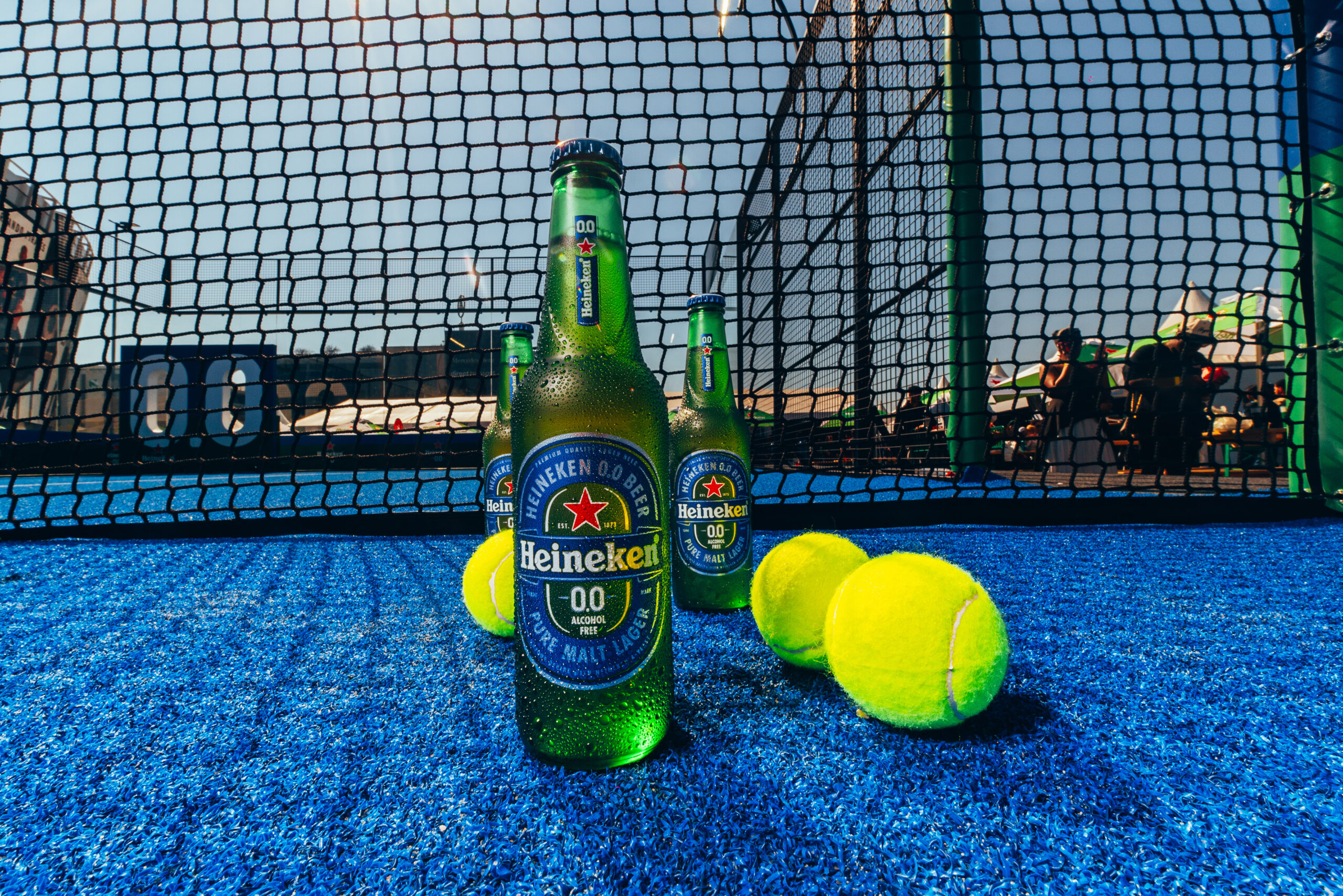
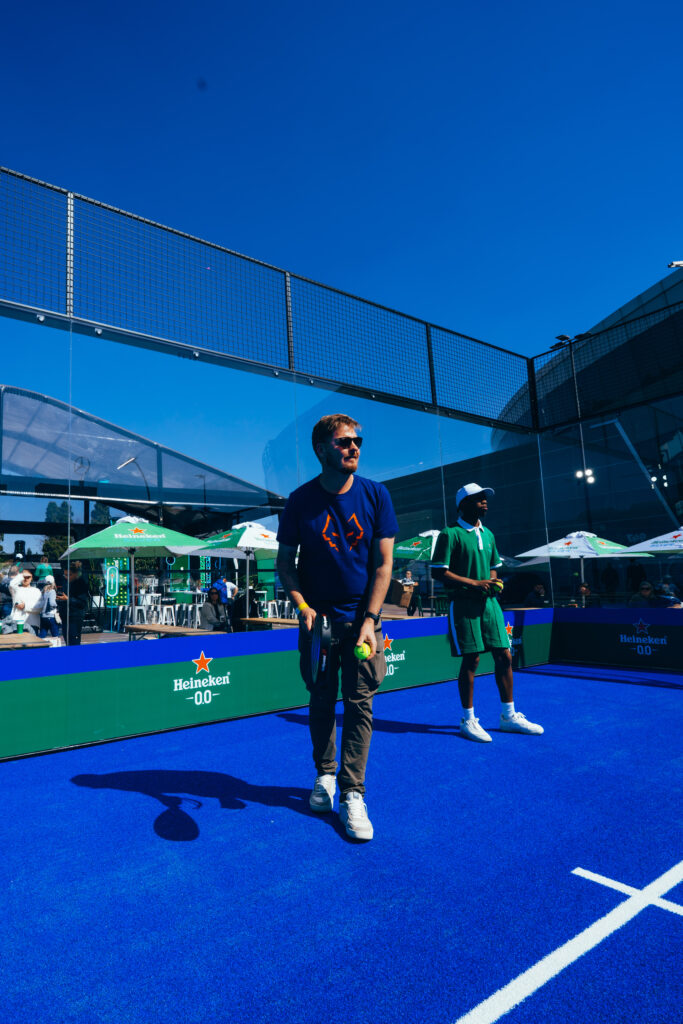
Much of the week’s texture came from what surrounded the courts. Entertainment and fan activations kept the venue humming, and at the centre of it sat the Heineken Silver Courtside Club, which became one of the busiest spaces on site. It gave spectators somewhere to catch up, slow down and stay tethered to the tournament between matches, and it worked as a natural meeting point throughout the week.
What is worth noticing is how the brand chose to position itself. Rather than simply stamping its name on the proceedings, Heineken built a space around the way people actually experience live sport, in the gaps, the intervals and the shared pauses where the social life of an event tends to happen.
“Premier Padel gave South African fans the opportunity to experience one of the world’s fastest-growing sports at the highest level, and we were proud to help make that experience even more memorable,”
– Warrick Wyngaard, Marketing Communication Manager at Heineken.
“For us, great sporting moments aren’t only about what happens on the court,” he continues. “They’re about bringing people together and creating opportunities for fans to connect through the sports they love. The energy and enthusiasm we saw throughout the tournament reinforced why these kinds of experiences matter.”
– Warrick Wyngaard, Marketing Communication Manager at Heineken.
A brand that convenes rather than advertises
It is a considered reading of what sponsorship can be. As padel continues to grow locally, the tournament offered the brand a chance to convene rather than merely advertise, to be part of an experience its audience genuinely wanted to attend. That instinct, to treat the crowd as guests rather than a captive market, is increasingly how the more thoughtful brands are approaching South Africa’s expanding events calendar.
Champions crowned, a case made
The sport itself did not disappoint. By the time the final point was played, Alejandro Galán and Fede Chingotto had taken the men’s title and Gemma Triay and Delfina Brea the women’s, and Pretoria had made its case emphatically. The city proved more than capable of hosting world-class padel, and fans had the rare pleasure of watching some of the game’s biggest names up close.
Yet the lasting impression is of something broader than a trophy presentation. A tournament like this measures a country’s readiness to host, and South Africa answered clearly. The appetite is here, the crowds are here, and the culture around the sport is maturing quickly. Pretoria did not simply stage an international event. It demonstrated the kind of occasion South African audiences now expect, and rewarded, when the sport and the setting are matched with equal care.


Related Articles

Moët & Chandon and the Art of the Occasion: Champagne Day Comes to South Africa
From Friday 23 to Sunday 25 October, Moët & Chandon…
Weylandts Pulls Up a Chair at The With, Its First Bar, for Design Week
For more than sixty years, Weylandts furniture has lived in…
Porsche Mission S: The Return of Restraint
Porsche has unveiled the Mission S, a vision model that…

