

The Audi and Heineken House F1 Edition brought the Brazilian Grand Prix to Johannesburg on Sunday, 8 November, and opened the afternoon with a dedicated Audi experience before the lights went out. One brand handled the hospitality and the other brought a car with 470 kW of plug in hybrid power. Together they made a broader case about Formula 1 in South Africa: its local future depends on how people gather to watch it as much as on what happens on the circuit.
The sofa problem
Most South African Formula 1 fans watch race day from the couch. A BusinessTech poll found that 51% of respondents usually watch races at home, while 45% don’t usually watch Formula 1 live at all. Not one respondent named an organised public viewing event as part of their usual race day. The Heineken House F1 Edition was built around that gap. It took a ritual that usually happens in private and staged it as a social occasion, with Audi as the first stop of the afternoon.
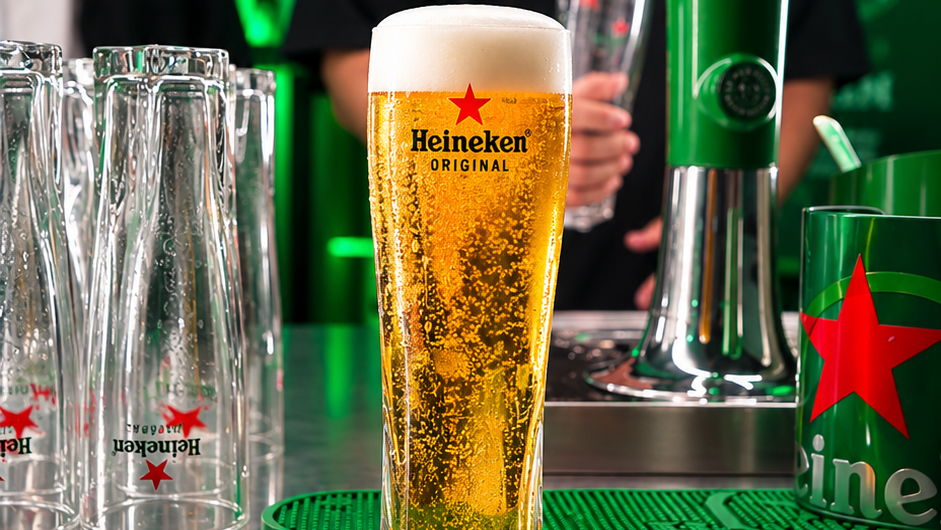
The pairing works because each brand brings something the other lacks. Heineken knows hospitality: the music, the room and the reasons to stay. Audi brings the machinery, and with it a reminder that the sport on the screen is ultimately about engineering. Their collaboration covered both halves of what makes Formula 1 compelling, the spectacle and the technology.
Formula 1’s global audience has grown on drama, personality and debate. The sport now lives in group chats, in arguments over pit stop calls and in the shared intake of breath before lights out. By this measure, the local market has lacked a habit of gathering to watch it.
Warrick Wyngaard, Marketing Communication Manager at Heineken South Africa, describes the brand’s role in exactly those terms. “Formula 1 has an incredible ability to bring people together, and that’s where Heineken sees an opportunity to add something meaningful to the race day experience,” he says. “Heineken House creates a space where invited guests can experience that same race day excitement collectively, with great entertainment, hospitality and the social connection that sits at the heart of Heineken’s relationship with Formula 1.”
Engineering before the lights go out
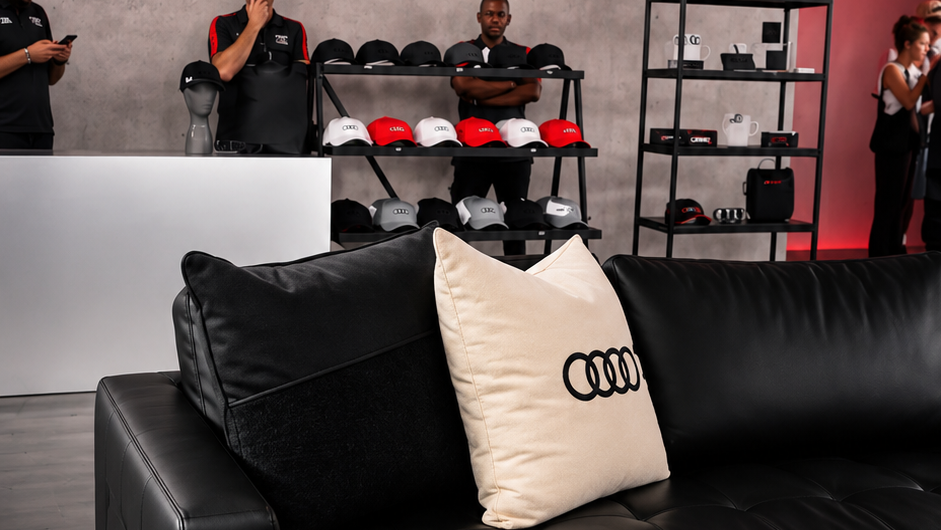
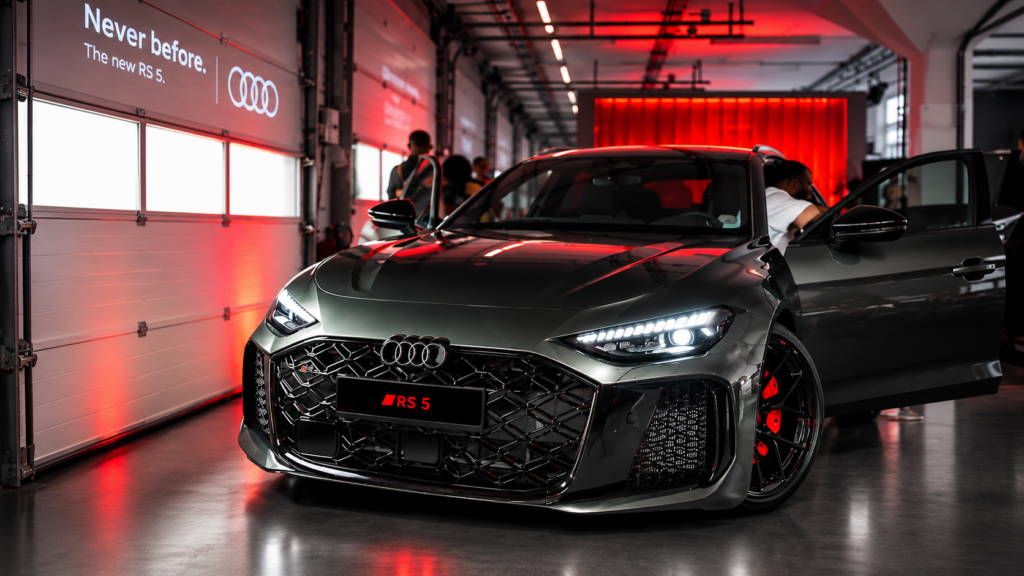
Opening the afternoon with Audi set the tone. Before a single lap of Interlagos was screened, guests met the kind of engineering that Formula 1 is supposed to inspire, and the new Audi RS 5 shows that inspiration clearly.
The RS 5 is the first car to carry the nameplate with plug in hybrid technology. A 2.9 litre twin turbocharged V6 works with an electric motor to produce a combined 470 kW and 825 Nm, sent through an eight speed Tiptronic transmission and quattro all wheel drive. It reaches 100 km/h from standstill in 3.6 seconds, and its top speed is electronically limited to 250 km/h, or 285 km/h with the optional Audi Sport package.

The detail that fits a race day best is the boost function. Press a button and maximum system output is available for up to ten seconds while a countdown runs in the driver’s display. Formula 1 fans will recognise the idea: a deployable burst of electric power used at the right moment. The connection is real. Hybrid energy recovery has shaped Formula 1 for more than a decade, and Audi’s own entry into the championship this season gives the link extra weight.
The engineering goes well beyond straight line speed. Dynamic Torque Control uses an electromechanical torque vectoring system on the rear axle to split power between the rear wheels, which sharpens the car’s response through corners. Its 22 kWh battery gives between 78 and 84 kilometres of electric driving, so the same car that impresses on a track day can do a quiet Johannesburg school run without starting its V6.

Race Sunday, reprogrammed
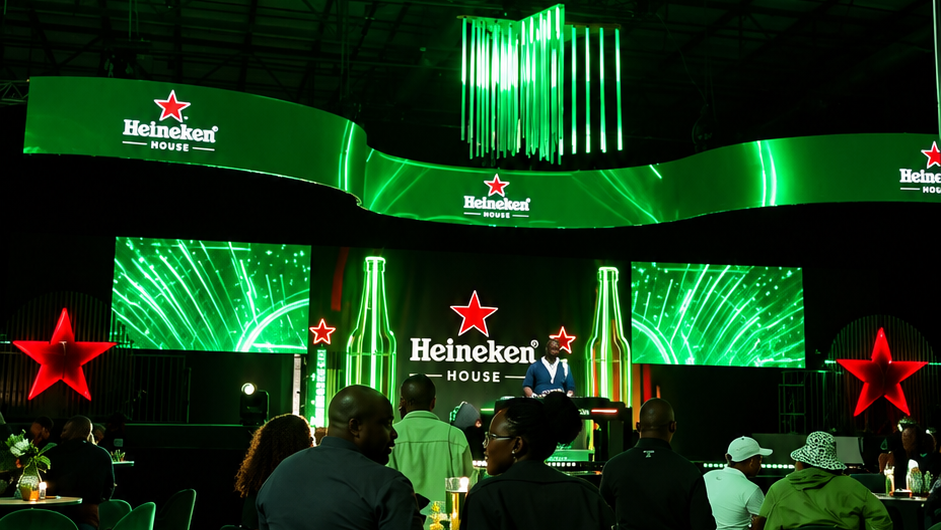
From the Audi experience, guests moved through to the Paddock Club for the Brazilian Grand Prix screening. Heineken then took over hosting as the race unfolded, with entertainment and hospitality built around the simple pleasure of watching together.
The music programme was billed to feature Thuly Thulz, Akio, McShawty and PH, with Sun-EL taking over for an hour after the chequered flag. Kwenzo, Jaxx, Cassi, Sweet Guluva, Tyrone Jones and Zulu Mkhathini were named among the guests. The list was deliberate. It drew from entertainment and popular culture, which is exactly where Formula 1 has found its newer, younger audience.
That audience overlaps with the buyers both brands want to reach. For Audi, a room full of tastemakers watching the world’s most technical sport is a natural place to show a car that brings electrification into its performance line. For Heineken, a car that ties the experience to the hardware of motorsport makes the occasion feel like more than a branded screening.

A sponsorship designed to be lived in
Heineken’s global partnership with Formula 1 is playing out locally through a 2026 campaign meant to keep fans engaged well beyond the race itself. It runs on three fronts: Heineken House, The Paddock Club and limited edition packaging.
The packaging is the quietest of the three and possibly the most telling. Heineken’s F1 inspired aluminium bottle is available only at Heineken House experiences and select on trade venues. It’s a small object that relies on principles luxury brands have long used: scarcity, access and the sense of belonging to something not everyone can reach. The same logic applies to an invitation to an afternoon where a 470 kW Audi shares a bill with the country’s most watched entertainers.
Heineken House itself is closed to the public, but the campaign opens up nationally through The Paddock Club, Heineken’s digital rewards platform. Fans earn points by buying Heineken products, answering F1 trivia, collecting limited edition bottles and competing with friends. Rewards range from beer and limited edition F1 beer packs to race screening experiences and hosting kits.
That last reward says a lot about the strategy. Heineken isn’t trying to drag fans away from watching at home so much as make home viewing more sociable, turning the living room into a smaller version of the room it built in Johannesburg.
The best seat in the house
Modern sponsorship has learnt that a logo on a car is only the beginning. The real value lies in owning the room where people watch and giving them reasons to fill it. On the afternoon of the Brazilian Grand Prix, Audi and Heineken split that job between them: one supplied the engineering that makes the sport worth watching, the other supplied the company that makes watching worthwhile. The championship takes place thousands of kilometres from South Africa, and both brands are betting that for local fans the best seat on race Sunday is the one next to someone else.

Related Articles

A Summer State of Mind: Why Sun City Is the Ultimate December Escape
From palatial splendour and private luxury villas to tropical landscapes,…
Two Hours Off the Clock: Ster-Kinekor Opens Its Epic Deal to Everyone This Black Friday
Ster-Kinekor’s Black Friday offer opens The Epic Deal to every…
500 Pairs in Mccreedyblue: The Veldskoen Conor McCreedy Built to Be Collected
The Veldskoen Conor McCreedy collaboration takes a shoe that has…

